
Why Do Cats Love to Push Things Off Tables?
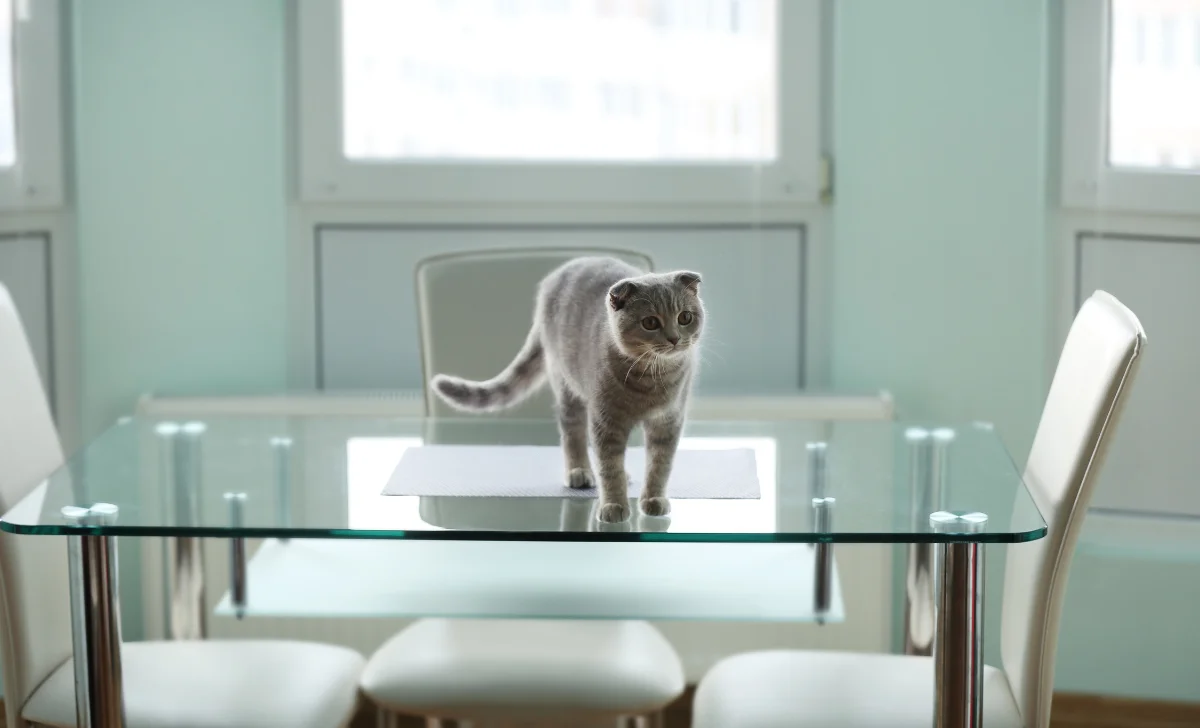
You know the scene: your cat casually strolls over, looks you dead in the eye, and slowly pushes your coffee mug right off the edge. This isn’t your cat being a jerk—there are four main reasons why cats do this: hunting instincts, curiosity, wanting attention, and boredom. Once you figure this out, dealing with your cat’s destructive habits becomes way easier.
The trick isn’t to stop them completely—it’s giving them better ways to satisfy these natural urges. When you understand what’s driving this behavior, you can work with your cat instead of against them. Trust me, this approach works so much better than just getting mad every time they send something crashing to the floor.
The Hunting Instinct Behind the Push
Wild cats use their paws to test potential prey, batting at things to see if they’re alive or worth chasing. Your house cat’s brain works exactly the same way—when they see your pen, their instincts treat it like prey. Those hunting reflexes are still firing even though your fluffy friend has never caught a mouse in their life.
This behavior is especially strong in cats who don’t get enough playtime or high-energy breeds. When your cat knocks something off the table, their brain gets a satisfaction hit—like “mission accomplished.” It’s the same reward system that kicks in when catching real prey.
The best fix is daily hunting-style play with feather wands or fishing pole toys for 10-15 minutes. Make it dart around like real prey and let them “kill” it at the end. When your cat gets this regularly, they’re way less interested in treating your belongings like hunting practice.
Curiosity: Testing How the World Works
Cats are furry scientists, and your coffee table is their laboratory. Every push teaches them how things work—does it bounce or break? Their sensitive paws gather tons of information through touch and manipulation. It’s like they’re running little experiments all day long.
This is especially true with new objects. You’ve probably noticed how quickly your cat investigates anything new you bring home, pushing it around to figure out why it makes interesting sounds on different surfaces.
Give them safe stuff to experiment with instead. Keep a basket of empty toilet paper rolls, ping pong balls, and small boxes they can bat around freely. Rotating these weekly keeps things interesting, and they’ll leave your actual belongings alone.
Attention-Seeking Behavior in Cats
Your cat has figured out that knocking things over gets instant attention, even if it’s just yelling or cleanup scrambling. Cats are smart—they’ve basically trained you to respond to their destructive behavior. Even negative attention beats being ignored completely.
This happens most when you’re focused elsewhere, like work calls or your phone. Your cat targets things they know get big reactions, usually fragile or important-looking items. Sometimes they pause to make sure you’re watching first, like saying “Hey, remember me?”
The fix requires ignoring the behavior completely—no rushing over, scolding, or even looking their way. Clean up later when they’re gone. Instead, schedule specific daily cat time, even just five minutes of focused attention. When your cat knows they’ll get regular attention, they stop creating disasters to demand it.
Boredom and the Need for Stimulation
Indoor cats need 12-16 hours of mental stimulation daily. When bored, pushing your stuff around becomes instant entertainment. It’s like having nothing to do, so you start rearranging furniture just for something to occupy your time.
This is common with younger cats or intelligent breeds needing constant challenges. If your cat knocks things over multiple times daily, their environment is probably boring. They need variety, puzzles, and regular changes to stay mentally engaged.
Rotate toys weekly, set up different perches, and use puzzle feeders for meals. Window perches provide hours of “cat TV” watching outside wildlife. Another cat can also work—they’ll keep each other busy rather than wrecking your home. Keep their brains busy with appropriate activities so they don’t create chaos.
In the End
Remember, your cat isn’t trying to ruin your day—they’re just being cats. Whether practicing hunting, conducting experiments, demanding attention, or fighting boredom, there’s always a reason behind the behavior. Consider what they really require rather than what they’re ruining.
Quick prevention: put away valuables, use double-sided tape around table edges (cats hate sticky feelings), and create designated spaces with cat-friendly knockable items. Most importantly, maintain daily interactive play and attention routines. When you meet your cat’s real needs, the destructive behavior usually stops naturally.
