
How to Make Your Deck Safe for Kids and Pets with Decks and Balcony
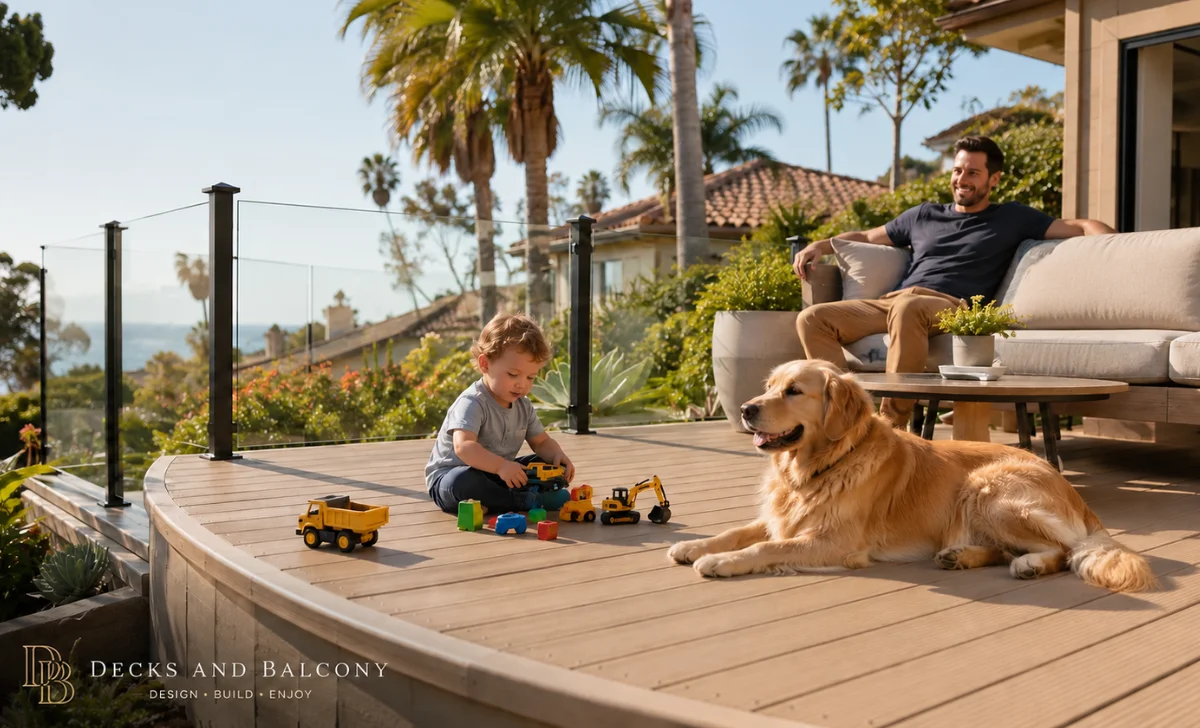
A deck is supposed to be a place of freedom, but for parents of young kids and dog owners it often turns into a constant source of worry. A toddler can squeeze between balusters, a dog can leap off the edge and twist a paw. Cats manage to find dangerous gaps where there shouldn’t be any. None of this means giving up on a deck — it just means designing it with the people and pets who’ll spend time there in mind.
A deck that’s safe for kids and pets doesn’t have to look like a cage with rubber mats and floor-to-ceiling netting. A thoughtful approach combines aesthetics with protection, and thousands of California families live with such spaces without incident.
Useful examples of ready-made solutions can be studied at https://www.decksandbalcony.com/, where projects with various levels of safety are gathered. Below we’ll cover what deserves attention first.
Railings and Barriers — the Primary Defense Line
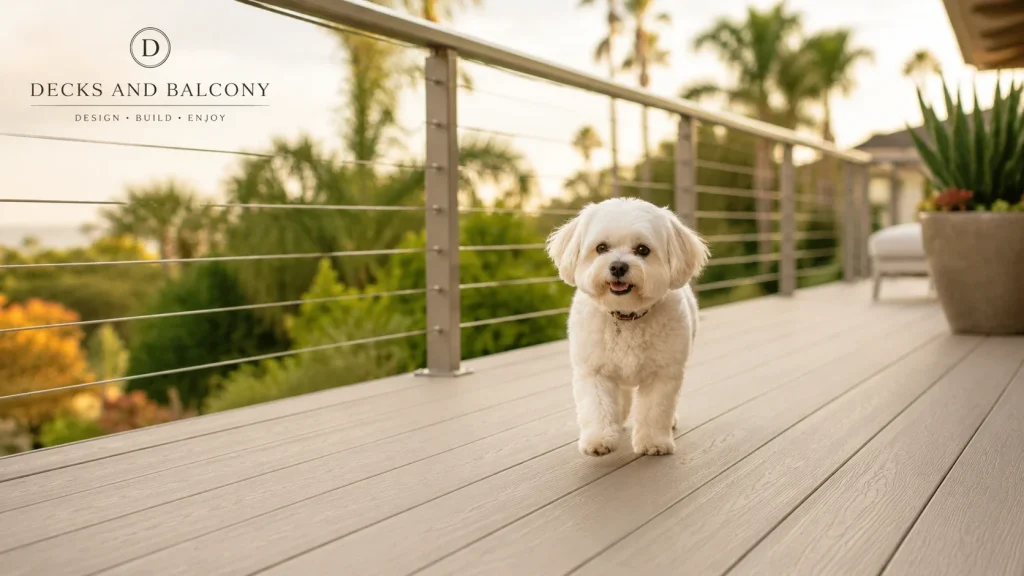
California building codes set the minimum railing height for raised decks at forty-two inches. That’s enough for most adults, but if your family includes a teenager who likes to sit on the rail, raise it a bit higher. Height is only part of the story. The spacing between balusters can’t exceed four inches, otherwise a child’s head or a puppy will fit through.
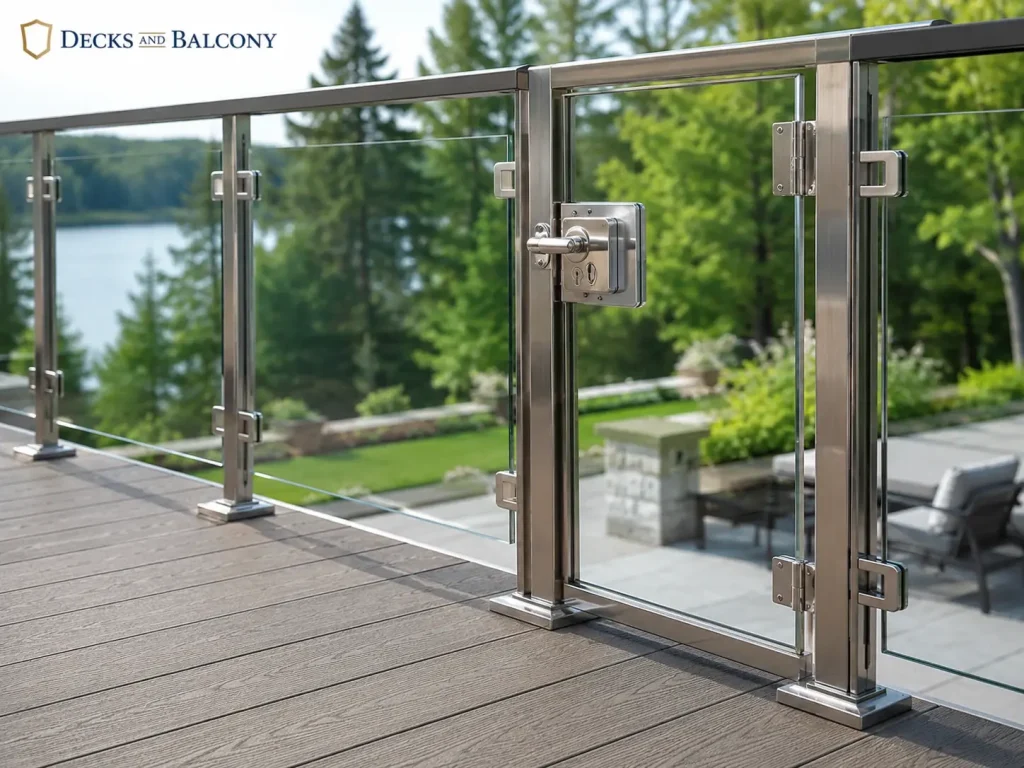
Plenty of homeowners prefer solid barriers made of tempered glass or dense composite. These options rule out the possibility of getting stuck between pickets. Glass also opens up the view and doesn’t block light — a critical point for small yards where every sunbeam matters. The downside of solid railings: fingerprints and dog nose smudges show up clearly, so wiping them down becomes a regular task.
Whatever material you choose, railings must still meet code on height and baluster spacing, so if your current setup falls short, a quick handrail remodeling project is often all it takes to make the deck safe and secure.
Flooring That’s Friendly to Both Four and Two Legs
A wet slippery board is the first thing that comes to mind when discussing deck dangers. Falls on slick surfaces happen far more often than serious injuries from height. So choosing the deck material isn’t about looks — it’s about safety.
These options have proven themselves well:
- Composite boards with embossed grain that mimics natural wood
- Tropical hardwoods with natural roughness, like ipe or garapa
- Special anti-slip coatings for existing wood decks
- Rubber modular tiles in children’s play zones
- Stone pavers with sawn rather than polished surfaces
Every different choice has its good and bad points about how long it lasts and its look. Composite outlasts pine and doesn’t need yearly refinishing. Rubber tiles help where kids play actively, though they look less elegant.
The Decks and Balcony crew often mixes materials in a single project — composite in main traffic areas, soft modular tiles where the kids play, hardwood near the dining zone — and the result both looks intentional and works in real life.
Seven Steps to a Safe Platform
If you already own a deck and want to check how family-friendly it is, run through the checklist below. Every part takes around ten to fifteen minutes, and when combined, they provide a full idea of your safety features.
- Check railing stability around the entire perimeter, pressing with adult-strength force
- Measure baluster spacing in several places — it should be uniform and within code
- Inspect stair treads for cracks, chips, and wobbling boards
- Test slip resistance by pouring a glass of water on a board and walking barefoot
- Remove any plants toxic to animals from the deck — oleander, ivy, lilies
- Close all gaps wider than a quarter inch in the decking to prevent paws from slipping
- Make sure the grill or fire pit area is fenced off from kids’ paths
After such an audit it becomes clear whether urgent work is needed or minor adjustments will do. Owners often underestimate railing wear — they look solid but wobble under firm pressure. That’s a signal for serious repair, not a decorative paint job.
Hazards People Usually Don’t Consider
Beyond the obvious risks like falls and splinters, there are subtler traps. Sun-baked metal furniture leaves burns on kids’ palms and dogs’ paw pads. Dark composite decking heats up to scorching levels in California afternoon sun — a dog won’t run ten feet on it without harm.
Another typical threat is gaps between boards where small toys fall and dog claws snag. When a child tries to retrieve a dropped car, they might pick up a splinter or pinch their fingers. Regular surface inspection and timely replacement of cracked boards removes most of these risks.
Grills, Fire Pits, and Other Heat Sources
Cooking and fire zones are the most dangerous spots on any deck. Position the grill no closer than ten feet from the house wall and any combustible materials. A non-flammable mat larger than the grill itself is worth placing underneath. This protects the surface from sparks and dripping grease.
Fire pits are gaining ground in California gardens, especially gas models with artificial stones. They’re striking and relatively safe, but require a barrier from kids and pets. A grown dog can easily burn its tail walking past if the bowl’s rim is too low. The minimum safe height for a fire pit barrier is about twelve inches, plus a buffer of at least three feet from where people and animals typically walk.
Build a Safer Deck with Decks and Balcony
Family-safe doesn’t have to mean bland or boxed in. Decks and Balcony specializes in builds that read as relaxed and beautiful while quietly handling every safety detail in the background — the right baluster spacing, the right surface texture, the right placement for heat sources.
The team is happy to walk through your existing deck with you and point out what needs attention, whether or not you end up hiring them for the work.
If you’re starting from scratch, the consultation covers everything — railing styles that won’t trap little heads, floor materials that stay cool and grippy in the sun, layouts that keep kids and pets away from the riskiest zones.
Reach out to Decks and Balcony, share what worries you most, and the team will translate those concerns into a design your whole household can enjoy without holding its breath.
