
6 Best Ceiling Design Ideas for Modern Homes
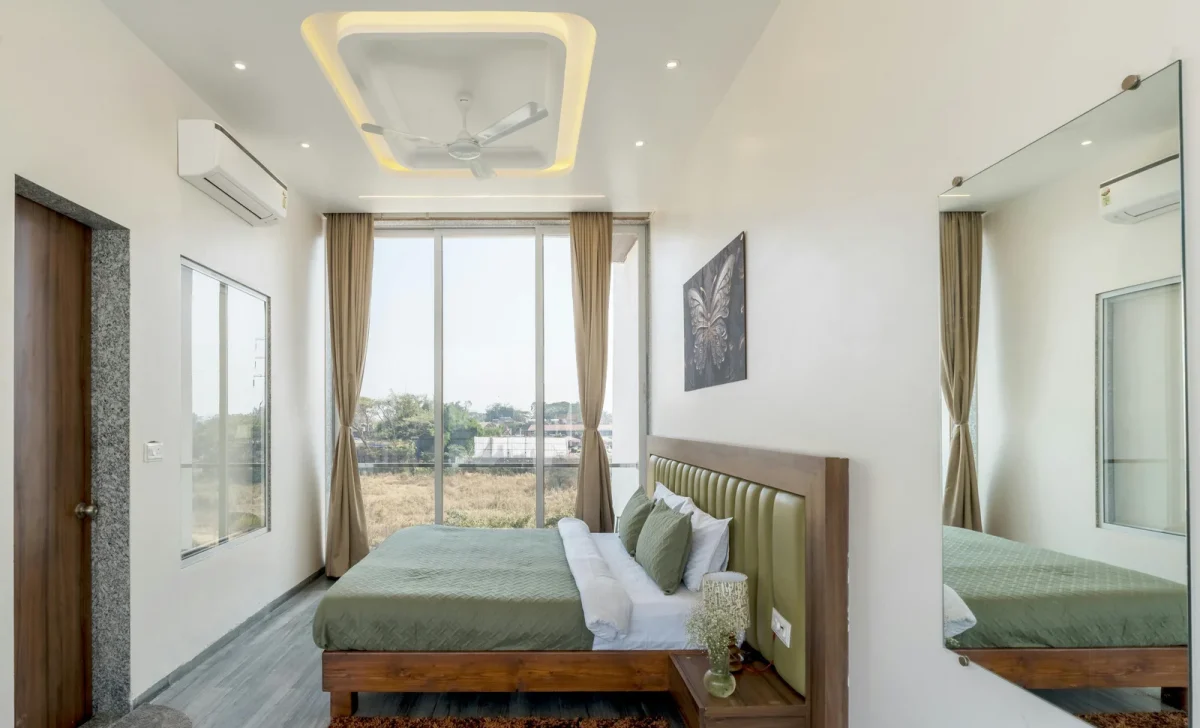
Walls and floors get most of the design attention, but the ceiling is the one surface visible from almost every angle in a room, and it’s often left blank. A well-designed ceiling adds architectural interest and can make a space feel taller, warmer, or more intentional without a full renovation.
This guide covers:
- Structural and material-based ceiling treatments, from wood beams to coffered panels
- How ceiling height and shape affect the feel of a room
- A lighting-forward ceiling idea that doubles as a room’s focal point
- Which ceiling style suits which type of space
At a Glance
| Takeaway | Detail |
| Ceilings are underused design real estate | Most rooms leave the ceiling blank while investing heavily in walls and floors. |
| Wood beams add warmth without major structural work | Exposed or applied beams work on both flat and vaulted ceilings. |
| Coffered ceilings add depth through repetition | A grid of recessed panels creates architectural rhythm without extra height. |
| Vaulted and cathedral ceilings amplify a sense of space | Height changes how a room feels more than almost any other single element. |
| Lighting can be the ceiling’s focal point | A well-chosen fixture draws the eye upward the same way a structural feature would. |
| Tray ceilings work well with cove lighting | The recessed center creates a natural channel for soft, indirect illumination. |
| Gypsum and plaster allow custom geometric patterns | These materials are lightweight and support intricate designs without heavy structural load. |
| Not every idea suits every ceiling height | Vaulted treatments need height to read correctly; low ceilings do better with flatter, lighter designs. |
Exposed Wood Beams
Exposed or applied wood beams are one of the more straightforward ways to add texture to a flat ceiling without a full structural renovation. Beams read differently depending on wood tone: lighter woods like white oak or ash keep a room feeling bright and airy, while darker walnut or stained beams add drama and make a large room feel more intimate.
In homes with existing structural beams, leaving them exposed rather than covering them with drywall preserves a detail that’s expensive to fake convincingly. Where structural beams don’t exist, lightweight faux beams achieve a similar effect at a fraction of the cost.
Coffered Ceilings
A coffered ceiling uses a grid of recessed panels to add depth and rhythm to a flat surface, and it reads as considerably more architectural than a plain ceiling without requiring extra height. The recessed sections catch shadow differently than the surrounding surface, which is part of what gives coffered ceilings their sense of dimension even under flat paint.
Adding trim around each coffer sharpens the effect further, and painting the recesses a slightly different shade than the surrounding field makes the grid pattern read more clearly from below. This style suits dining rooms, home offices, and living rooms with a traditional or transitional aesthetic, though simplified, wider-spaced coffers also work in more contemporary spaces.
Vaulted and Cathedral Ceilings
Height changes how a room feels more than almost any other single design element, and a vaulted or cathedral ceiling is the most direct way to add it. Vaulted ceilings slope upward from the walls toward a central ridge, opening up vertical space without expanding the room’s footprint.
Cathedral ceilings follow a steeper, more symmetrical version of the same idea, meeting at a central peak for a more dramatic effect. Both styles tend to amplify natural light, since the added height usually comes paired with taller windows higher on the wall.
Light, neutral paint colors on a vaulted or cathedral ceiling keep the space feeling airy rather than heavy, while darker tones add coziness in smaller rooms with the height to support it. This treatment works best in homes that already have the structural height available, since retrofitting a flat ceiling into a vaulted one is a significant renovation rather than a cosmetic update.
Statement Lighting as the Ceiling Feature
Not every ceiling upgrade requires structural work. A single well-chosen fixture can function as the ceiling’s focal point on its own, especially over a dining table, kitchen island, or long console where the shape of the space calls for something more deliberate than a round pendant.
Rectangular spaces benefit from fixtures that match their proportions rather than fighting them, which is where browsing ceiling light fixtures by mount type over a dining table or island tends to outperform a standard round chandelier. The fixture’s length distributes light evenly along the surface below, which also reduces the number of separate fixtures a room needs.
This approach works well specifically because it requires no structural changes, just a fixture swap and, in most cases, existing electrical. For rooms where the ceiling itself is flat and unremarkable, browsing modern ceiling lighting options by room and fixture type is often the fastest way to identify a single piece that changes how the whole room reads from below, without touching drywall, framing, or paint. Light House Co. organizes its lighting catalog by fixture type and room, which makes it easier to compare linear, round, and
Tray Ceilings with Cove Lighting
A tray ceiling steps up toward the center of the room, creating a recessed section that reads as a subtle architectural feature even in homes without much extra height to work with. The recessed edge is a natural channel for cove lighting, hidden LED strips that wash light upward along the recess rather than shining directly down.
The effect is soft, indirect illumination that adds depth without the harshness of a single bright overhead source. Tray ceilings pair well with bedrooms and primary suites, where ambient rather than task lighting tends to be the priority.
Gypsum and Plaster Geometric Patterns
Gypsum and plaster ceilings support intricate patterns, from geometric grids to curved, wave-like forms, without adding significant weight. The material’s clean, seamless finish makes it a common choice in contemporary homes where a coffered or beamed ceiling would feel too heavy or traditional.
Pairing a gypsum ceiling with recessed spotlights rather than a single central fixture tends to produce the most polished result, since flush lighting doesn’t compete visually with the ceiling’s own pattern. This works well in living rooms and entryways, where the ceiling becomes a quiet architectural statement rather than a backdrop.
Which Idea Fits Your Space
| Ceiling Idea | Works Best In | Minimum Ceiling Height | Structural or Lighting-Only |
| Exposed wood beams | Living rooms, kitchens | Standard 8-foot | Structural (or lightweight faux) |
| Coffered ceiling | Dining rooms, home offices | Standard 8-foot, shallow version | Structural |
| Vaulted or cathedral | Great rooms, entryways | Requires extra vertical height | Structural |
| Statement lighting | Dining rooms, kitchen islands | Standard 8-foot | Lighting-only |
| Tray with cove lighting | Bedrooms, primary suites | Standard 8-foot | Structural |
| Gypsum geometric pattern | Living rooms, entryways | Standard 8-foot | Structural |
Choosing the Right Ceiling Idea
A ceiling doesn’t have to stay blank just because it’s easy to ignore. Whether the approach is structural, like exposed beams or a coffered grid, or purely a lighting change, the ceiling has more room to contribute to how a space feels than most rooms currently use.
Key Takeaways
• Match the ceiling idea to the room’s existing height, since vaulted and cathedral treatments need vertical space flat retrofits don’t have
• Consider lighting-only changes before structural work, since a single fixture can function as the ceiling’s focal point on its own
• Pair recessed or cove lighting with textured ceilings to add depth without a harsh single light source
Starting with the lowest-effort option, usually a lighting change, is a reasonable way to test whether a ceiling update makes the difference a room needs.
Frequently Asked Questions
What’s the difference between a vaulted and a cathedral ceiling?
A vaulted ceiling slopes upward from the walls but doesn’t necessarily meet at a single central peak, while a cathedral ceiling follows a steeper, symmetrical slope that meets at a central ridge. Both add height and light, but cathedral ceilings tend to read as more dramatic due to the sharper, more uniform angle.
Do coffered ceilings work in rooms with standard 8-foot ceilings?
They can, though the effect is more subtle than in taller rooms. Shallow coffers with minimal trim depth keep the design from feeling heavy in a lower-ceiling room, while deep, dramatic coffers need more vertical clearance to avoid making the space feel closed in.
Can a light fixture really change how a ceiling looks without other changes?
Yes, particularly in rooms with a flat, unremarkable ceiling. A statement fixture shaped to match the room below it, like a linear chandelier over a rectangular table, draws the eye upward the same way a structural ceiling feature would, without any construction involved.
What ceiling style works best for low ceilings?
Flatter, lighter treatments generally work best. Simplified coffers with shallow trim, light paint colors, and flush or recessed lighting all keep a low ceiling from feeling more compressed. Vaulted, cathedral, and deep coffered styles need more height than a standard low ceiling provides.
Are exposed wood beams only for rustic-style homes?
No. Beam tone and spacing change the effect considerably. Lighter woods and evenly spaced beams read as more contemporary, while darker, irregular beams lean more rustic. The same structural idea supports a range of styles depending on finish and configuration.
Is cove lighting difficult to add to an existing flat ceiling?
It requires converting the ceiling to a tray or stepped profile first, since cove lighting relies on a recessed edge to hide the light source and direct it upward. It’s more involved than a fixture swap but less invasive than a full vaulted ceiling renovation.
