
Why Is My House So Dry in Winter & How to Fix It
Have you ever noticed that during winter your home feels unusually dry? Maybe your throat feels scratchy in the morning, your skin becomes itchy, or your nose feels dry and uncomfortable. For many adults and seniors, winter dryness isn’t just uncomfortable, but it can worsen allergies, asthma, sinus problems, and other health conditions.
Many people wonder, “Why does my home get so dry during the colder months?” This is a very common issue across the world, especially during December and the colder months.
In this article we will explain why this happens, why you should monitor humidity in a home in winter, and provide a practical, step-by-step plan to increase humidity in a house in winter to create a comfortable and healthy indoor climate.
What Causes the Air in My Home to Lose Moisture Every Winter?
Chilly air has a reduced capacity to retain water vapor
In winter, outdoor air naturally contains much less moisture than warm air. When this cold, dry air enters your home through doors, windows, or ventilation, it lowers the overall humidity indoors.
Once that air is heated, its relative humidity drops even further, making the air feel extremely dry.
Indoor Heating Dries the Air
Heating systems are one of the biggest reasons homes feel dry in winter.
- Furnaces
- Space heaters
- Central heating systems
Heating units increase air temperature without increasing its humidity. In fact, they often remove it. The longer your heater runs, the drier your indoor air becomes.
Homes Are Sealed Tightly in Winter
To keep warm and save energy, we keep windows and doors closed during winter. While this helps with heating costs, it also means:
- Less fresh, moist air circulation
- Dry air gets trapped indoors
Over time, humidity levels can drop well below what’s healthy.
How Dry Indoor Air Affects Your Health
For health-sensitive adults and seniors, dry indoor air can cause or worsen several problems.
Throat and Respiratory Discomfort
Dry air can irritate the lining of your throat and airways, leading to:
- Dry or scratchy throat
- Persistent coughing
- Worsening asthma or bronchitis symptoms
If you already have respiratory conditions, low humidity can make breathing more uncomfortable.
Nasal and Sinus Problems
Low humidity can dry out your nasal passages, which may cause:
- Nasal congestion
- Nosebleeds
- Sinus irritation
A dry nose is worse at trapping bacteria, which raises the chance of getting sick.
Skin Dryness and Itching
In winter, many people notice:
- Dry, itchy skin
- Flare-ups of eczema or psoriasis
- Cracked hands and lips
Dry indoor air pulls moisture from your skin, making these problems worse—especially for older adults with naturally drier skin.
Sensing a Chill Despite the Heater Running
Air with low humidity can create a chillier sensation in your home than the real temperature. This leads many people to turn up the heat, which:
- Increases heating bills
- This further reduces the moisture in the air
This turns into a difficult loop to escape without careful tracking..
What are the best indoor heat and moisture levels for winter?
For most adults and seniors, experts recommend:
- Indoor temperature: 68–72°F (20–22°C)
- Indoor humidity: 40–60%
When humidity drops below 30%, many people start experiencing dryness-related symptoms. The challenge is that you can’t feel humidity accurately. That’s why monitoring it is so important.
Why You Should Monitor Indoor Temperature and Humidity
Often, people just estimate:
- “The air feels dry.”
- “It feels cold in here.”
- “My skin is itchy—maybe I need a humidifier.”
But symptoms often appear after humidity has already been too low for a while.
Monitoring Helps You:
- Catch low humidity early
- Decide when to use a humidifier
- Avoid over-humidifying (which can cause mold)
- Maintain consistent comfort day and night
For those with health concerns, live tracking can stop issues before they start.
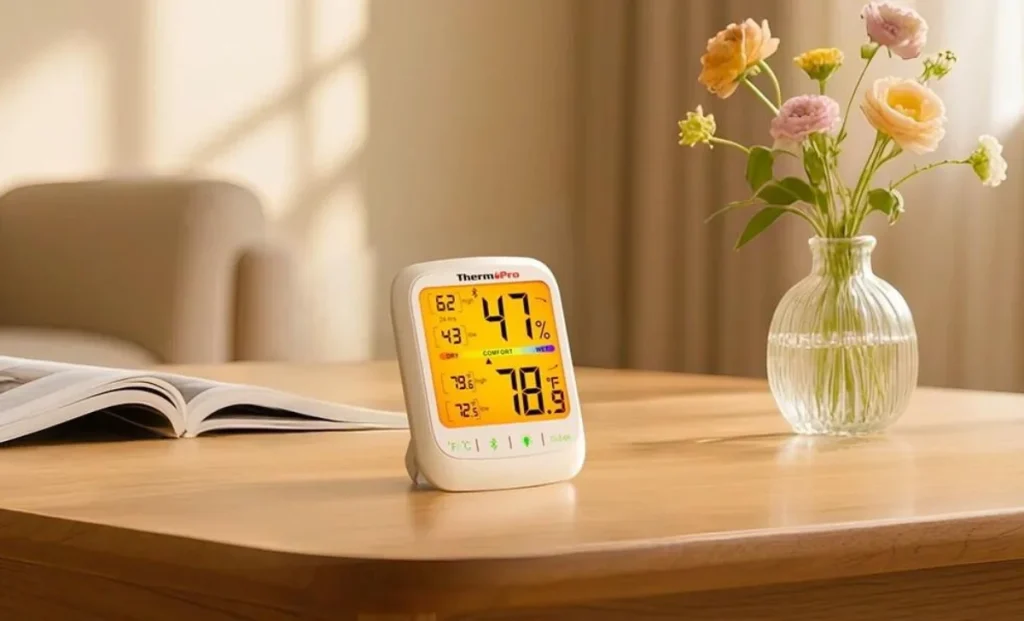
To effectively monitor humidity and temperature in house in winter, you need a reliable, accurate, and easy-to-use tool. The ThermoPro TP359 Bluetooth Indoor Hygrometer Thermometer is specifically designed for this purpose, acting as your personal indoor climate consultant.
Here’s why the ThermoPro TP359 is the ideal choice for health-sensitive adults and seniors:
Accurate temperature and humidity readings: ThermoPro TP359deliver consistently precise temperature and humidity measurements. For health-focused adults and seniors, this means no more guessing whether the air is too dry or too humid.
It shows you exact numbers you can trust. With reliable real-time data, you’re empowered to manage your home climate for comfort and health, rather than relying on how it “feels.”
260FT Bluetooth Connectivity for Monitoring on Your Phone: The ThermoPro TP359 goes beyond basic display readings by offering 260ft Bluetooth connectivity, allowing you to monitor your indoor conditions right from your smartphone.
Once connected, the accompanying app syncs seamlessly to show temperature and humidity trends over time. For seniors or anyone who prefers simple, convenient tech, this feature eliminates the need to constantly check a small screen.
Instead, your phone becomes the hub of your comfort, delivering alerts and insights that help you maintain a healthier, more comfortable indoor atmosphere with minimal effort.
Crystal-Clear, Easy Monitoring: It features a large, backlit LCD screen that displays temperature and humidity readings in bold, easy-to-read digits. No squinting required. The face clearly indicates if the humidity is in a “DRY,” “COMFORT,” or “WET” zone with a simple visual icon.
Smartphone Convenience & Historical Tracking: Through its ThermoPro app, you can check your home’s conditions from any room without getting up. Crucially, the app saves past readings, so you can see patterns across time. This is invaluable for correlating humidity dips with specific health symptoms, like nighttime coughing or morning congestion.
Personalized Comfort Alerts: Set custom alarm ranges for both temperature and humidity directly on the app. If the humidity falls below your personalized “comfort zone” (e.g., 45%), the device and your phone will notify you, prompting you to turn on your humidifier before your health is affected.
User-Friendly for All Ages: Its setup is straightforward—simply insert the batteries, sync with the app, and place it in a central location. The combination of a clear physical display and a powerful app makes it accessible for both tech-savvy users and those who prefer a simple glanceable device.
How It Helps Your Health
- Lets you know exactly when the air is too dry
- It aids you in choosing when to activate or deactivate a moisture-adding device
- Prevents over-humidification, which can cause mold
- Supports better breathing, skin comfort, and sleep
With ThermoPro TP359 Bluetooth Indoor Hygrometer Thermometer, you can get clear, reliable humidity and temperature in your house. This matters most if you deal with allergies, asthma, or delicate skin.
How to Improve Indoor Humidity and Comfort
1. Use a Humidifier (When Needed)
Humidifiers are helpful, but only when used correctly.
- Switch it on once the moisture level falls under about 40 percent.
- Turn it off once you reach a healthy range
- Clean it regularly to prevent bacteria
Without an indoor hygrometer, it’s easy to use a humidifier too much or not enough.
2. Control Indoor Temperature
It’s best to avoid setting your indoor thermostat excessively high. Keeping the indoor temperature steady helps maintain more stable humidity levels and reduces dryness.
3. Improve Air Circulation
Occasionally opening a door between rooms or using a fan can help distribute air evenly, preventing extreme dry spots.
4. Monitor, Don’t Guess
The best first action is to understand precisely what is occurring in your home. This is where an indoor hygrometer thermometer becomes essential.
Where to Place Your Indoor Hygrometer
For best results:
- Put the device in whichever room you use the most
- Avoid placing it near heaters or windows
- Bedrooms are especially important for overnight comfort
Many people choose to monitor more than one room during winter.
Final Thoughts: Create a Healthier Home This Winter
If your home seems dry in winter, it’s real, and you shouldn’t overlook it, particularly if your health is affected by your surroundings.
Dry indoor air can affect your breathing, skin, sleep, and overall comfort. Fortunately, with correct tracking and minor changes, you can build a better living space inside.
Using a reliable device like the ThermoPro TP359 Bluetooth Indoor Hygrometer Thermometer gives you the knowledge you need to take control of your indoor climate, helping you stay comfortable, breathe easier, and protect your health all winter long.
A healthier home starts with understanding your air.
