
Preparing for Frankfurt’s 2027 Design Fairs: A Last-Minute Printing Guide for International Exhibitors
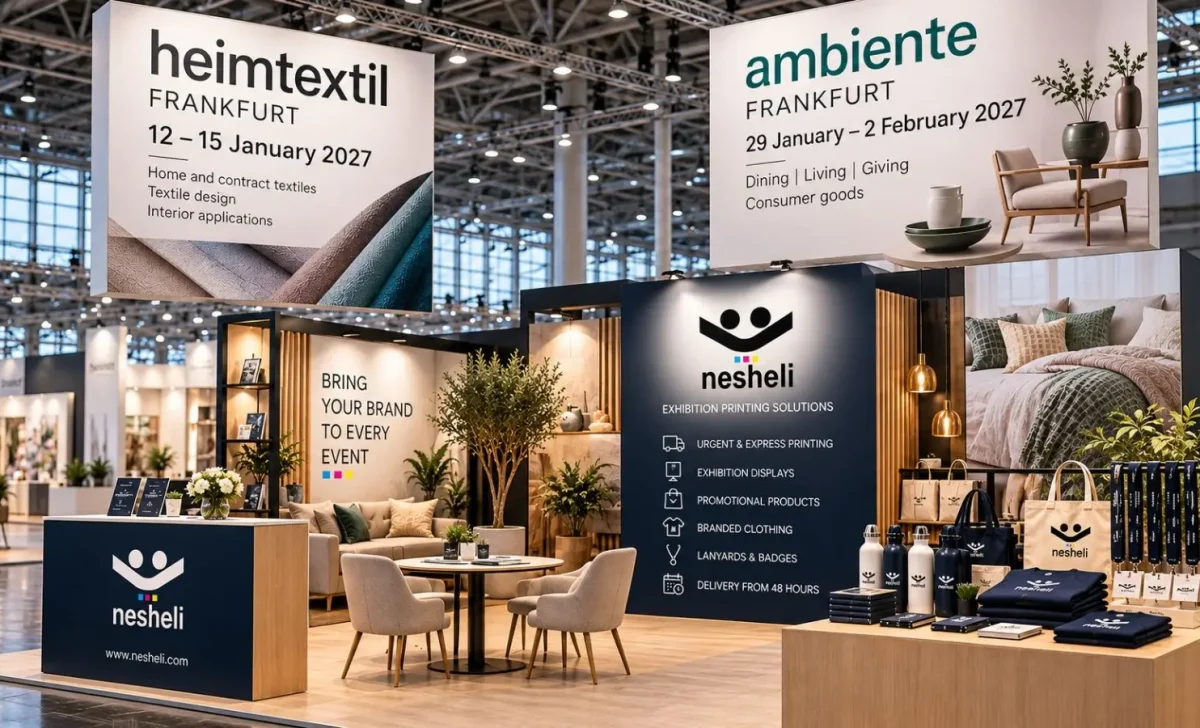
For home décor, furniture and interior design brands, exhibiting at an international trade fair is an opportunity to introduce new collections, meet buyers and establish valuable business relationships.
But preparing an exhibition stand thousands of miles from home can present unexpected challenges. Missing graphics, delayed promotional materials, incorrect banner dimensions or last-minute design changes can affect even the most carefully planned event.
With major international design exhibitions approaching in Frankfurt, Germany, companies travelling from the United States, United Kingdom and Australia should consider how their printed materials will be produced, delivered and replaced if something goes wrong.
Why Frankfurt Matters to the Interior Design Industry
Frankfurt is an important European destination for interior design, home furnishings and consumer goods businesses.
Two particularly relevant exhibitions are Heimtextil, scheduled for January 12–15, 2027, and Ambiente, scheduled for January 29–February 2, 2027.
Heimtextil focuses on home and contract textiles, textile design and related interior applications. Ambiente brings together international brands and buyers across dining, living and giving.
Both exhibitions provide opportunities for companies to present products, build commercial relationships and strengthen their presence in European markets.
For overseas exhibitors, a professional stand requires more than attractive products. Display graphics, signage, brochures and branded accessories should communicate a consistent visual identity.
Creating an Exhibition Stand That Reflects the Brand
Interior design exhibitions are highly visual environments. Visitors respond not only to individual products but also to the atmosphere and overall presentation of a stand.
A furniture brand might use a printed fabric backdrop to establish the setting for a new collection. A lighting manufacturer may combine illuminated graphics with product displays, while a home textile company might use carefully selected colours, banners and printed presentation materials to communicate its design philosophy.
Important elements include:
- Large-format exhibition graphics: Printed backdrops, fabric displays and wall graphics that support the overall stand design.
- Roll-up banners and promotional signage: Portable materials that communicate key product information and branding.
- Printed brochures and catalogues: Useful resources for buyers, distributors and potential business partners.
- Branded giveaways: Custom tote bags, notebooks, pens and other promotional products visitors can take away.
- Staff branding: Printed or embroidered clothing that creates a consistent professional appearance.
- Modular display systems: Reusable presentation structures that can be adapted for different exhibition spaces.
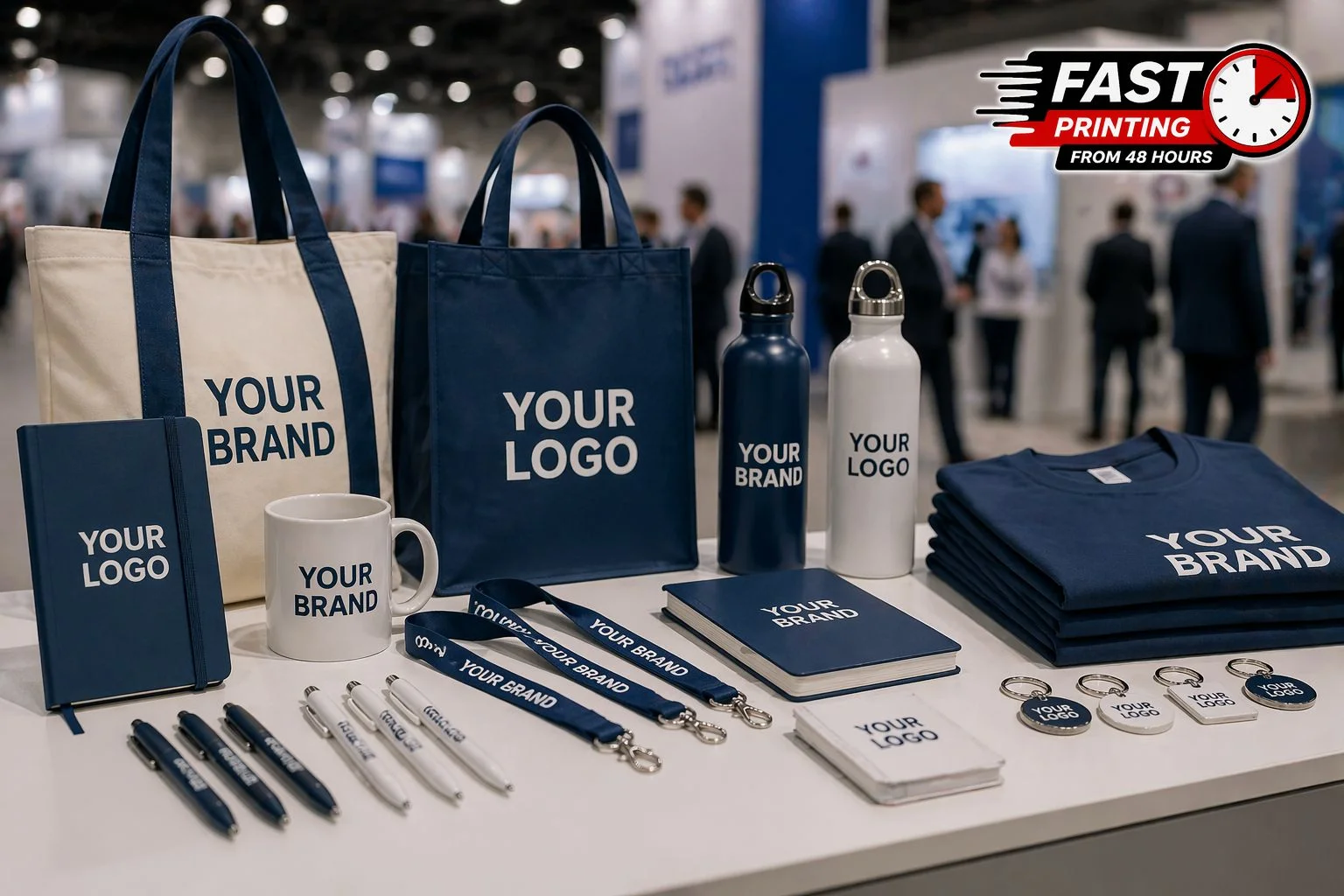
The objective is to create a cohesive environment where printed graphics, physical products and the brand’s visual identity work together.
The Challenge of Last-Minute Exhibition Printing
International exhibitors often prepare their marketing materials weeks or months before an event. However, even a carefully organised production schedule can change.
A product collection may be updated shortly before launch. A distributor’s details might need to be added to a brochure. An exhibition organiser may confirm revised stand dimensions, or a shipment containing promotional products could arrive later than expected.
For companies travelling from overseas, these situations can become particularly stressful.
Consider an American home décor company preparing for an exhibition in Frankfurt. Its team discovers that several printed banners contain outdated product information just days before installation.
Producing replacement materials in the United States and arranging international delivery may be difficult within the remaining time.
In such circumstances, sourcing suitable printed materials within Europe can be a practical alternative.
Why European Production Can Help Overseas Exhibitors
Working with a European printing provider can simplify certain aspects of exhibition preparation, especially when replacement materials or additional quantities are required.
Rather than organising another long-distance shipment, exhibitors can investigate production and delivery options closer to the destination.
Belgium-based Nesheli provides urgent and express printing solutions for trade shows and events in Frankfurt.
The company supports international businesses requiring customised promotional products, printed event materials, branded clothing, lanyards, badges and giveaways. Its wider exhibition product range also includes display systems, banners and presentation graphics.
For selected products, express production and delivery options can start from approximately 48 hours, depending on product availability, quantities, artwork and destination.
Not every product can be produced within the same timeframe. Confirming feasibility before ordering is therefore essential, particularly when an exhibition deadline is approaching.
Five Practical Steps Before an International Exhibition
1. Finalise Artwork and Measurements Early
Check logos, product descriptions, colour requirements and display dimensions before submitting files for production.
Where possible, provide print-ready artwork and verify the required specifications with the printing supplier.
2. Confirm the Venue’s Delivery Requirements
Exhibition venues may have designated receiving areas, restricted delivery periods and specific stand setup procedures.
Confirm the complete delivery address, contact person and latest acceptable arrival date.
3. Prioritise Essential Materials
When time is limited, identify the materials that are most important to the exhibition’s success.
A correctly branded backdrop, essential product information and professional signage may take priority over optional decorative items.
4. Choose Flexible Display Solutions
Portable banners, modular display systems and reusable graphics can simplify future exhibition preparation.
They may also provide useful alternatives when a complex custom installation cannot be completed within a short deadline.
5. Keep an Urgent Printing Contact Available
Before travelling, identify a supplier who can review urgent production requests within Europe.
Provide the event location, required products, quantities, artwork and exact deadline when requesting assistance. Clear information allows the supplier to assess available options more efficiently.
The Value of a Consistent Brand Experience
A successful exhibition presence is not defined only by the size of a stand or the number of promotional products distributed.
For interior design brands, visitors should experience the same design identity across the physical products, display graphics, printed materials and staff presentation.
Thoughtful branding can help buyers understand a collection and remember the company after the exhibition.
Professional printing also contributes to the broader atmosphere of the stand. Colours, graphics and display materials should complement the products rather than distract from them.
When unexpected production problems occur, maintaining this visual consistency becomes especially important.
Final Thoughts
For international home décor, furniture and interior design brands preparing for European trade shows, advance planning remains the best way to avoid unnecessary complications.
However, last-minute changes, delayed shipments and urgent printing requests can still happen.
By preparing artwork carefully, confirming delivery requirements and identifying European production alternatives, exhibitors can respond more effectively when deadlines become difficult.
As Frankfurt prepares to welcome international design and consumer goods businesses in 2027, having a practical backup plan for exhibition graphics, promotional materials and branded giveaways can help overseas companies focus on presenting their products and building business relationships.
