
How a DigiTrak Transmitter Works in HDD Locating
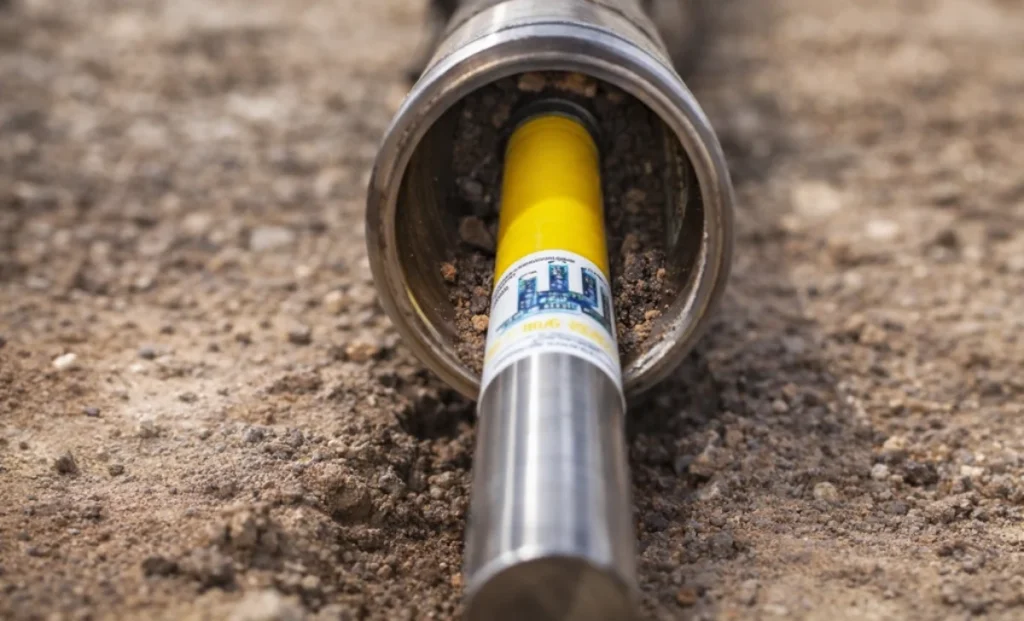
Horizontal directional drilling depends on one plain fact: you cannot steer what you cannot track. The drill head is underground, out of sight, often under pavement, traffic, structures, or developed property. That is why the locating system matters.
In a DigiTrak walkover setup, the transmitter is the part working downhole. It sits in the drill head or housing and sends out the signal that lets the locator operator track the bore from the surface.
That sounds simple, and it is simple at the core. The transmitter acts as the underground beacon. But the process is more exact than many crews first assume. The locator is not merely “finding a signal.”
It is reading the transmitter’s electromagnetic field, identifying specific points in that field, and turning those points into useful drilling information: location, heading, depth, pitch, roll, and transmitter status. On some models, it can also report fluid pressure.
For drilling contractors, utility workers, and equipment owners, this is important for two key reasons. First, it explains why a good locate depends on more than transmitter power alone. Second, it shows why setup, calibration, interference management, and locating method all affect field accuracy.
A transmitter can be working as designed and still lead to bad decisions if the system is paired wrong, calibrated poorly, or used carelessly.
This article explains how a DigiTrak transmitter works in HDD locating, what data it provides, how the surface locator reads that data, and where crews run into trouble. It also explains why the right setup matters as much as the transmitter itself.
The transmitter is the downhole signal source
A DigiTrak transmitter is the downhole beacon installed in the drill head or housing during HDD operations. Its job is to emit an electromagnetic locating signal that can be detected and interpreted from the surface by a DigiTrak locator.
That signal is the foundation of the walkover locating process. Without it, the locator operator cannot reliably know where the drill head is, which way it is pointed, or how deep it sits below grade.
In a complete DigiTrak locating system, the transmitter is only one part of a working chain. The locator at the surface receives and interprets the signal, while a remote display at the rig gives the driller the information needed to steer.
That means the transmitter is not a stand-alone field solution. It works as part of a system that includes the beacon, the locator, and the telemetry link back to the drill. The better those parts work together, the cleaner the data and the better the steering decisions.
This is where many crews are right in practice, even if they simplify the language. They may say, “The sonde tells us where the head is.” That is true, but incomplete. The transmitter provides the signal. The locator interprets the field. The remote display carries the information back to the drill. The process is shared. The transmitter starts it, but the field result depends on the full locating workflow.
The way the locator detects the transmitter’s magnetic signal
A DigiTrak transmitter works by creating an electromagnetic field that the locator operator reads from the surface. That is the heart of walkover locating. The receiver identifies specific positions in the transmitter’s field and uses them to determine where the tool sits underground.
The three key positions are the front tracking spot, the back tracking spot, and the tracking line. These are not abstract technical terms. They are the field marks the locator operator uses to track the drill.
The front tracking spot is positioned in front of the transmitter. The rear locate point sits behind it. The locate line runs above the transmitter itself. When all three are found correctly, the operator can establish the drill head’s path and take a valid depth reading at the proper place.
How the system determines depth, heading, pitch, and roll
The value of the transmitter is not just that it can be found. Its real value is that it gives the crew the information needed to steer. In HDD locating, that means four outputs matter most: depth, heading, pitch, and roll. These are the numbers and references that tell the driller where the tool is and how the tool face is oriented underground.
Direction is determined by how the front and back tracking spots relate to each other. Connect them with a line and you’ll see which way the transmitter is facing. That line tells the operator and driller where the head is traveling.
Depth is taken at the proper transmitter position where the heading line intersects the locate line. Done correctly, that gives a valid depth reading. Done carelessly, it can produce a number that looks official but is wrong in practice.
Pitch and roll add steering intelligence. Pitch tells the driller whether the head is climbing, dropping, or staying level. Roll tells the driller where the tool face is rotated.
Together they let the crew steer the drill head through a planned bore path instead of simply pushing blind. When crews talk about holding line and grade or making a correction, they are relying on pitch and roll data coming from the locating system.
Modern DigiTrak transmitters do more than basic locating
The old idea of a transmitter as a simple beacon is no longer enough. Modern DigiTrak transmitters are built to handle more than location alone. They provide a larger set of information and, in many cases, more control over how that information is delivered. That is one reason newer locating systems can perform better on difficult jobs than older, more limited setups.
One of the biggest improvements is frequency flexibility. Newer DigiTrak transmitter families offer a wide range of frequencies designed to help crews work around active and passive interference. Some models support hundreds of available frequencies. Others support more than a thousand.
Specialized versions can also operate in Sub-K ranges intended to perform better in reinforced environments such as areas with rebar or concrete influence. Contractors who want to compare DigiTrak Falcon, F5, F2, SE, Eclipse, Mark, and LT series transmitters can browse available options. That does not eliminate interference, but it gives crews more options to avoid the worst of it.
Another major improvement is selectable power. Some transmitters offer high, standard, and low power modes. High power can provide stronger signal performance and greater depth or data range.
Standard power balances performance and battery life. Low power can extend battery life and, on some systems, improve pitch and roll update speed. This turns the transmitter into an adjustable field tool. The crew can make choices based on the job instead of living with one fixed behavior.
The transmitter works best when the full locating system is set up right
A DigiTrak transmitter can be in good condition and still fail to produce reliable field results if the rest of the locating system is not set up correctly. This is where many locating problems begin. Crews often blame the transmitter first, but the real issue may lie in pairing, calibration, telemetry, or operator method. In other words, a transmitter works best when the full locating chain is working with it.
Before drilling begins, the system should be checked with the transmitter installed in the housing or drill head. That verifies the equipment is providing accurate location and heading information in the same configuration it will see during the bore.
Calibration matters because depth readings depend on it. So does proper locating technique. If the transmitter is not located correctly, depth will not be correct even if the receiver is working and the display looks normal.
Common jobsite limits and mistakes crews should understand
Every locating system has limits. A DigiTrak transmitter is no exception. Knowing these boundaries helps you operate the system properly. Some of the worst mistakes in HDD locating happen not because the equipment failed, but because the crew assumed the system could do more than it really could under the conditions at hand.
Interference is the first major limit. Active and passive interference can distort signal behavior, reduce confidence, and make locating less stable. Reinforced concrete, rebar, underground utilities, and surrounding electrical noise can all affect results.
This is one reason frequency flexibility and specialized transmitter options matter. But even with those tools, interference still has to be respected. No crew should confuse improved performance with immunity.
Depth and data range are another limit. Published transmitter performance numbers are useful, but they are based on defined test methods and do not guarantee identical field performance on every jobsite. Actual range varies with interference, housing effects, and site conditions. A transmitter may have enough signal to produce a location at one depth in clean ground and struggle at a lesser depth in hostile ground.
Final thoughts
A DigiTrak transmitter works because it gives the locating system something precise to read underground. It creates the field. The locator reads the field. The user finds the front tracking spot, back tracking spot, and tracking line. The system turns that field into location, heading, depth, pitch, roll, and transmitter status data that the driller can use in real time.
This is the detailed explanation.
The everyday explanation is much easier. A transmitter works well when the full system is chosen well, set up well, and used well. Good equipment helps. Good method matters more. When those two meet, HDD locating becomes clearer, steadier, and more useful to the crew doing the work.
