
The Intersection of Science and Self-Care: Modern Paths to Physical Renewal
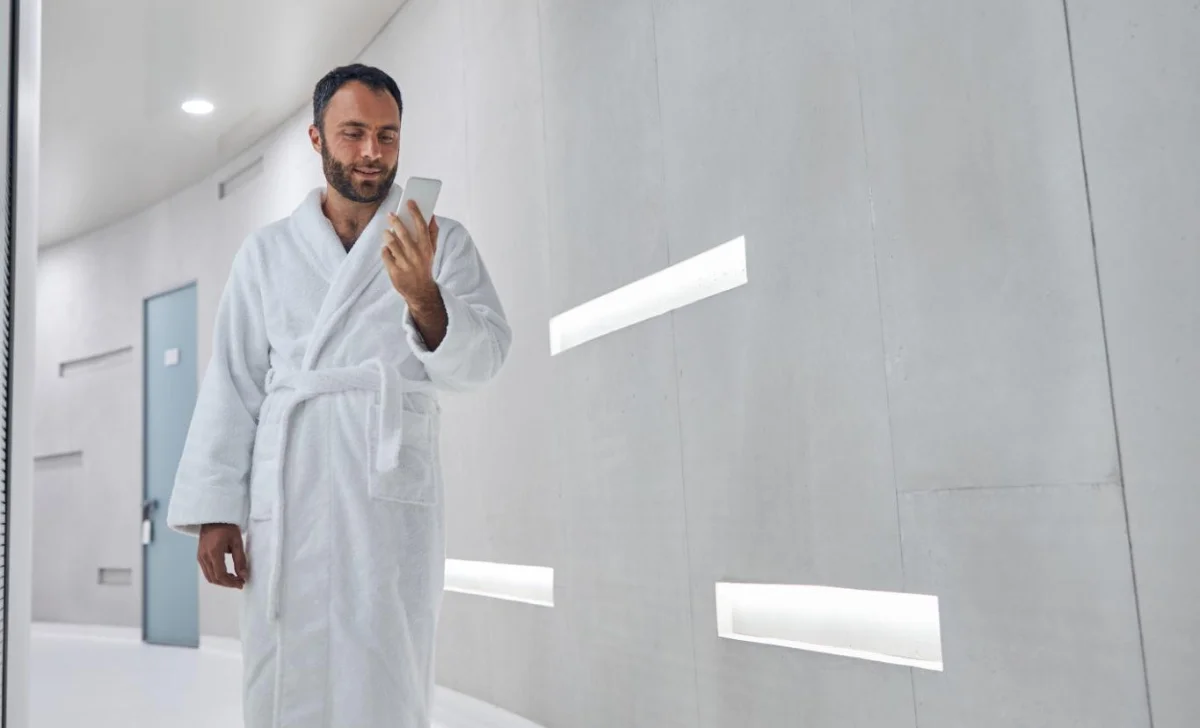
You know, there’s a strange moment you hit sometimes when you’re standing in a pharmacy aisle or scrolling late at night and you realize… self-care doesn’t really look like “self-care” anymore. It looks like data. Formulas. Devices that beep. Ingredients you can barely pronounce. And somewhere in that blur, the line between wellness and science just kind of dissolves.
That’s where things start to get interesting.
Because the modern idea of renewal isn’t just face masks and spa days anymore. It’s also clinical research, dermatology labs, controlled dosing, and yes, even “medical products for licensed professionals” quietly shaping what ends up in your everyday routine. It’s often hidden, yet it guides everything from behind the curtain.
And maybe that’s the real shift. Self-care didn’t get softer. It got smarter.
Where science quietly meets your skin, muscles, and recovery
If you zoom out a little, physical renewal today is basically a hybrid space. Part wellness, part lab report.
You’ve got skincare influenced by peptide research. Recovery routines shaped by sports medicine. Even stress relief tied to neurochemistry (which sounds intense, but also… kind of fascinating, right?).
The World Health Organization puts it pretty plainly: “Being healthy means more than just not being ill; it’s feeling good physically, mentally, and socially.” That definition matters here because it expands everything. Suddenly, self-care isn’t just comfort. It’s maintenance. Optimization. Sometimes correction.
And yeah, it can feel a bit clinical. The first time you look at ingredient concentrations or professional-grade devices, you might think, “Wait… this looks like something from a hospital, not my bathroom.” I honestly had that reaction once when a friend showed me a microcurrent device. I thought it looked fake. Like a movie prop or something. It wasn’t.
Harvard Health Publishing has also pointed out in its wellness research summaries that “consistent, evidence-based routines often outperform high-intensity, inconsistent interventions.” Which is a fancy way of saying: small science-backed habits beat occasional extremes.
Simple, but easy to forget.
What “modern self-care” actually means now
Here’s the thing. Today’s self-care has many aspects. It covers more than just one area now.
It’s:
- Skin barrier repair (not just hydration)
- Sleep quality tracking (not just “getting rest”)
- Inflammation management (not just soreness relief)
- Hormonal balance awareness (not just mood swings)
- Recovery optimization (not just stretching)
And somewhere inside that ecosystem are the tools that used to belong only in clinical environments… including medical products for licensed professionals that influence treatment protocols before they ever reach consumer routines.
The NIH (National Institutes of Health) has noted in multiple studies that “the translation of clinical findings into consumer health tools has accelerated significantly in the last decade.” Which basically explains why your skincare serum now sounds like a biotech experiment.
However, this is where problems start to appear.
Because you’re not a lab. You’re a person. You don’t always want precision. Sometimes you just want to feel good without deep thoughts about body science details.
And honestly? That tension never fully goes away.
The clinical side you don’t always see
A lot of modern renewal practices start in places you’ll never visit. Dermatology research centers. Rehabilitation clinics. Pharmaceutical development labs.
Then they trickle down.
Botanical extracts get standardized. Devices get simplified. Dosages get softened for general use. And what was once “professional-only” slowly becomes consumer-friendly.
But the origin still matters.
The FDA has emphasized in its guidance documents that “professional supervision remains essential for procedures or substances requiring controlled administration.” That’s a polite way of saying: not everything should be DIY.
And maybe that’s reassuring… or maybe it makes you more cautious. Both reactions are fair.
I remember talking to someone who worked in clinical aesthetics, and she said something that stuck with me: “People think it’s about beauty. But mostly it’s about tissue response.” That sentence kind of lingers. Tissue response. Not glow. Not vibes. Response.
A little clinical. A little humbling.
How people actually build science-informed self-care routines
Let’s make this practical for a second. Because theory is nice, but what do you actually do with all this?
Most science-informed routines tend to orbit a few pillars:
1. Recovery first, aesthetics second
Sleep, hydration, stress reduction. Not glamorous, but foundational.
2. Evidence-based ingredients
Things like retinoids, peptides, ceramides, niacinamide. Not magic. I just studied.
3. Controlled stimulation
Things like light therapy or regulated topical actives, sometimes inspired by medical products for licensed professionals but adapted for home use.
4. Consistency over intensity
The boring truth nobody wants to hear.
Quick Pro Tip
If a product promises dramatic change in 24 hours, pause. Real biological change is usually slower. Skin turnover alone takes roughly weeks, not days. Fast results often mean temporary effects… or irritation.
The emotional side of all this science
Here’s something that doesn’t get talked about enough: when self-care becomes scientific, it can feel slightly distant.
Like you’re managing a system instead of caring for yourself.
Some people love that. It feels structured. Predictable. Almost empowering.
Others feel overwhelmed. Too many steps. Too many active ingredients. Too much tracking.
And both reactions are valid.
There’s also this weird emotional split where you start trusting numbers more than your own perception. Your skin feels fine, but your app says hydration is low. So which one is real?
I believe no single solution is entirely right.
Maybe both are.
The trade-offs nobody really explains clearly
Let’s be honest here. Science-driven self-care isn’t flawless.
It comes with trade-offs:
- More effectiveness, but also more complexity
- Better outcomes, but slower understanding
- Higher precision, but less intuition
- Stronger tools, but higher responsibility
And sometimes, over-reliance on professional-grade inspiration (including medical products for licensed professionals) can blur the line between helpful guidance and unnecessary complication.
You don’t always have to make everything perfect.
Certain things just need to bring comfort.
Pro Tip
If your routine starts feeling like a lab protocol, simplify it for a week. Strip it down to three basics. Cleanse. Protect. Recover. Then reintroduce complexity only if your skin or body actually needs it.
You might find that doing “less” often works better than doing “more”.
Where this is all heading
The intersection of science and self-care isn’t really a trend anymore. It’s the default direction.
We’re moving toward:
- More personalized skincare based on biomarkers
- Recovery plans influenced by wearable data
- Non-invasive tools inspired by clinical medicine
- And a slow merging of wellness + medical research pipelines
The NIH has described this broader shift as “precision health approaches tailored to individual variability.” That might sound complex, but it means simply this: what works for one person may not work for another.
So your routine probably shouldn’t either.
Final thoughts
At the end of the day, you’re standing in this weird in-between space. Half instinct, half science. Half self-trust, half data.
And maybe that’s okay.
Maybe renewal was never supposed to be purely emotional or purely clinical. Perhaps it was always true in two ways; we just couldn’t explain it back then.
So you experiment. You adjust. You overthink a little. Then you simplify again.
And slowly, you figure out what actually makes your body feel like itself again.
Not perfect. Not optimized. Just… better than before.
