
Interview with a Chef: Why I Carry Kyoku in My Knife Roll
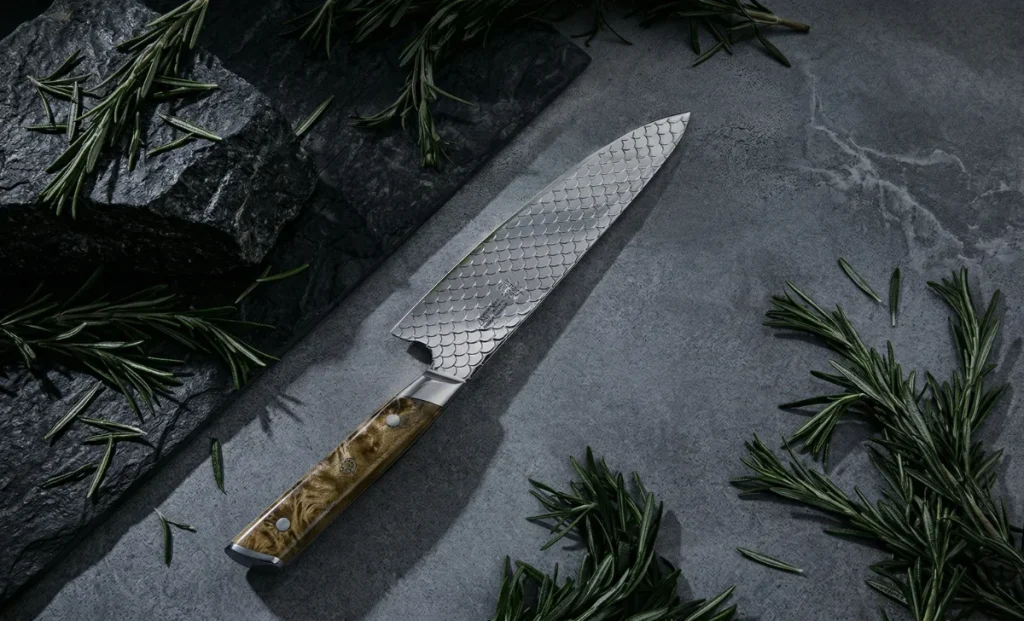
For a professional chef, a knife roll isn’t just a bag of tools; it’s a portable sanctuary. It’s the culmination of years of blistered palms, midnight prep sessions, and the relentless pursuit of the perfect dice. When a chef chooses a blade to occupy that limited real estate, it’s a high honor.
Today, we sat down with Chef Marcus Chen, an Executive Sous Chef at one of Chicago’s high-volume Japanese-fusion hotspots, to find out why his Kyoku blades have become his go-to “daily drivers.”
The Interview
Kyoku: Chef, you’ve worked in kitchens for over fifteen years. You’ve seen every brand under the sun. Why Kyoku?
Chef Marcus: (Laughs) “I’ve definitely owned my fair share of ‘status symbol’ knives—the ones that cost more than my first car and make you nervous every time you hand them to a line cook. But in a high-volume kitchen, I need a blade that is a ‘warrior,’ not a museum piece.
Kyoku hit that rare sweet spot for me: Samurai-level sharpness but at a price point where I’m not afraid to actually use it. I carry the Shogun Series 8″ Gyuto and the Samurai Series Petty, and they’ve earned their keep.”
Kyoku: What was your first impression when you took the Shogun out of the box?
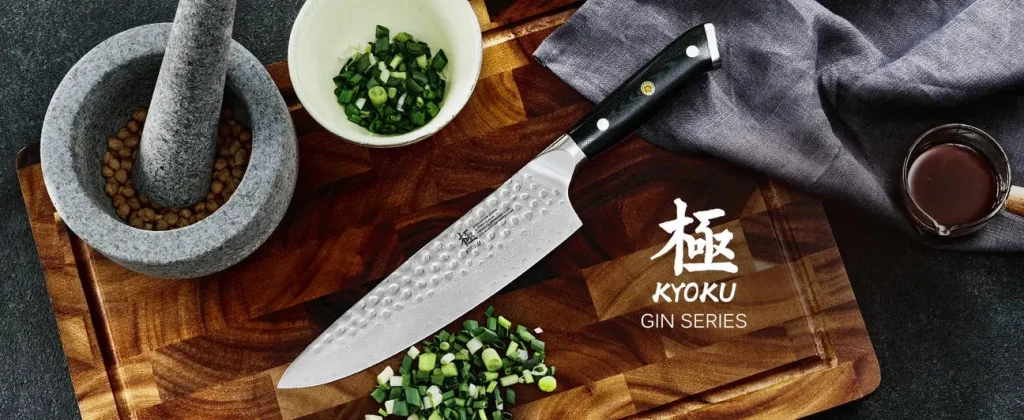
Chef Marcus: “Honestly? The balance. A lot of makers get the ‘look’ right—the Damascus ripples and all that—but the knife feels ‘blade-heavy’ or the handle is clunky. The Kyoku Shogun felt like it was already broken in. The bolster is shaped perfectly for a pinch grip, which is how I spend 10 hours a day. When the weight isn’t right by just a little bit, my wrist notices it by the time I serve dessert. With Kyoku, that fatigue just isn’t there.”
“In this industry, your knife is an extension of your hand. If there’s any friction between what your brain wants and what the blade does, the dish suffers. Kyoku removes that friction.”
Kyoku: We talk a lot about the ‘Samurai Soul’ of our knives. Does that translate to a modern, chaotic kitchen?
Chef Marcus: “Absolutely. To me, that soul is about reliability and discipline. When I’m breaking down 40 pounds of salmon for service, I need to know that the edge isn’t going to give up on me halfway through. The VG-10 steel Kyoku uses holds its ‘scary sharp’ edge significantly longer than the German steel knives I started my career with. It respects the product. You aren’t ‘sawing’ through fish; you’re gliding. That’s the discipline of the craft.”
Kyoku: Any advice for the home cook who might be intimidated by a professional-grade Japanese knife?
Chef Marcus: “Don’t be. People think these knives are fragile ‘glass’ blades. While you shouldn’t go hacking at frozen bones with them, they are much tougher than people realize. My advice? Start with the Kyoku Santoku. It’s the perfect ‘bridge’ knife. It gives you that elite Japanese precision but feels stable and approachable. It will transform how you prepare food at home right away.”
Chef Marcus’s Top 3 “Must-Haves”
From what we discussed, these are the three Kyoku knives Marcus places at the front of his collection.
| Tool | Purpose | Why he loves it |
| Shogun 8″ Gyuto | Primary Workhorse | “The balance point is perfect for high-speed dicing.” |
| Samurai 5″ Petty | Detail & Garnish | “It’s a scalpel for shallots and citrus supreme.” |
| Kyoku 1000/6000 Whetstone | Maintenance | “I touch up my edge every Sunday; it’s my meditation.” |
Final Thoughts
Chef Marcus’s story is one we hear often. Whether you are plating 200 covers a night or just trying to make a clean dinner for your family, the tool you hold changes your relationship with the food. At Kyoku, we are honored to be in the rolls of professionals and the drawers of home creators alike.
