
Winter Safety in Canada: How Heated Mats Protect Families During Cold-Weather Travel
Canadian winters transform landscapes into stunning white vistas, but they also create hazardous conditions for families navigating icy driveways, walkways, and stairs. Every winter, thousands of people in Canada are hurt after slipping and falling on ice.
Winter-related falls represent a significant portion of seasonal emergency room visits, with children and elderly family members particularly vulnerable.
Heated outdoor mats have emerged as a practical solution to this persistent safety challenge. These electrically powered systems melt snow and ice on contact, maintaining clear pathways without the constant labor of shoveling or the environmental toll of chemical de-icers.
For families planning winter road trips or simply managing daily routines during harsh weather, these mats offer a reliable first line of defense against winter’s most common hazards.
The Engineering Behind Snow-Melting Technology
Modern heated mats use embedded heating elements that activate when temperatures drop below freezing. The technology operates on a simple principle: maintaining surface temperatures just above the melting point prevents ice formation while consuming minimal energy.
Most residential systems draw between 50 and 200 watts per square foot, comparable to running a few household light bulbs.
The efficiency of these systems has improved dramatically over the past decade. Properly installed heated walkway systems can reduce winter maintenance costs while providing consistent safety benefits throughout the season.
Key advantages include:
- Automatic activation through built-in temperature sensors that respond to weather conditions
- Elimination of repetitive shoveling, reducing physical strain and time commitment
- Consistent surface clearing that prevents the dangerous freeze-thaw cycles common with manual snow removal
- Long-term durability, with quality systems lasting 15-20 years with minimal maintenance
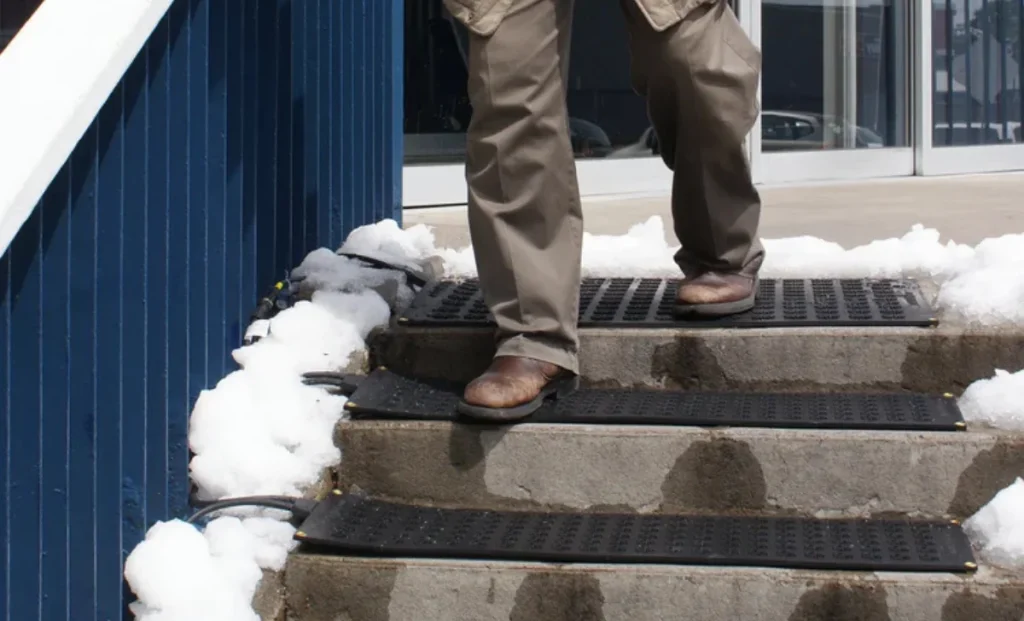
For families with young children or elderly relatives, this technology addresses a genuine safety concern. A heated stair mat, for instance, ensures that the most accident-prone areas around a home remain consistently clear, even during overnight snowfall.
Matching Heated Mat Solutions to Specific Areas
Different areas around a home require different approaches to snow management. The mat that works for a front entrance won’t necessarily suit a long driveway or a set of outdoor stairs. Knowing these differences allows families to spend money on the correct fixes for their unique situation.
- Entryways and Doorways: Snow-melting door mats placed at main entrances prevent the tracking of snow and ice into homes while keeping the immediate area safe for arrivals and departures. These compact units typically measure 2-3 feet wide and plug into standard outdoor outlets.
- Stairways: Outdoor stairs present the highest risk for serious falls. Heated stair mats conform to standard step dimensions and can be installed on wood, concrete, or composite materials. The consistent heat distribution prevents ice buildup in the treads where feet naturally land.
- Walkways and Sidewalks: Heated walkway pads come in modular sections that can be configured to cover paths of varying lengths. These systems work particularly well for the routes families use most frequently—from the driveway to the front door, or from the garage to a side entrance.
- Driveways: A driveway heating mat represents a larger investment but eliminates the most labor-intensive aspect of winter home maintenance. These systems can be installed under existing pavement during renovation or laid as rubber mats on top of concrete surfaces.
Families can match heated mat solutions to specific home areas from KEMF, EconoHome, or ProMelt for targeted snow management approaches. These heating mat specialists help families understand that mats working for front entrances won’t necessarily suit long driveways or outdoor stair sets requiring area-specific distinction understanding for the right solution investments.
Practical Integration for Winter Travel Safety
Families who travel during winter months face compounded safety challenges. Heated mats at home ensure safe departures and returns, but the technology also extends to portable applications that enhance safety on the road.
Before winter travel:
- Verify system operation: Test heated mats before the first major snowfall to ensure all components function properly. Check for any damage from the off-season and confirm that sensors activate at appropriate temperatures.
- Clear surrounding areas: While heated mats handle their designated zones, ensure that snow from adjacent areas won’t create new hazards. Position snow banks away from walkways and entrances.
- Educate family members: Ensure all members know that surfaces with heating stay safe to walk on, even when nearby areas are icy. This is particularly important for children who might not recognize the difference.
- Plan for power outages: Winter storms can interrupt electricity. Have backup plans for snow removal during outages, and consider battery backup systems for critical areas like stairs.
Some families invest in portable heated mats for use at vacation properties or to keep in vehicles for emergency situations. These smaller units can warm up a tent platform during winter camping or provide a safe standing area when changing a tire in snowy conditions. For winter safety tips, dive into this detailed article.
Maintaining Safety Systems Through the Season
Heated outdoor mats require minimal maintenance, but regular attention ensures optimal performance throughout winter. Most systems are designed to operate continuously during cold months, but periodic checks help identify potential issues before they compromise safety.
Monthly maintenance tasks include inspecting visible components for damage, clearing any debris that might insulate the mat surface and reduce heating efficiency, and verifying that drainage systems prevent water pooling around the heated areas. Ice dams can form at the edges of heated zones if meltwater doesn’t drain properly.
At season’s end, portable mats should be cleaned, dried thoroughly, and stored in a climate-controlled space. Permanent installations benefit from a professional inspection every few years to check electrical connections and heating element integrity.
Making Winter Travel Safer for Canadian Families
The investment in heated outdoor mats represents more than convenience—it’s a fundamental safety upgrade for homes in winter climates. These setups remove a major cause of winter injuries and also lessen the ecological harm caused by conventional snow and ice clearing.
For families with young children learning to navigate winter conditions, elderly relatives with reduced mobility, or anyone concerned about the daily hazards of ice and snow, heated walkway mats provide reliable protection. The technology has matured to the point where it offers genuine value rather than luxury, particularly in regions where winter weather dominates half the year.
As Canadian winters continue to present challenges for homeowners, the combination of safety, environmental responsibility, and reduced maintenance burden makes heated mat systems an increasingly practical choice. They allow families to focus on enjoying winter activities rather than constantly battling the hazards that come with the season.
