
Cost Effective Electrical Renovation for Small Business Owners
Key takeaways
- You can save money on energy bills with simple upgrades to your lighting, controls, and heating, cooling, and ventilation systems.
- Many small business owners begin to find out ways to save money on energy as soon as they switch to more energy efficient systems.
- A scheduled upgrade schedule helps minimize downtime as well as make your facility safer.
- Careful assessments help you determine which areas need attention first so as to not overspend.
I’ve looked at plenty of workplaces over the years, from small mom-and-pop shops to bustling production floors. After a while, you start to notice a common pattern: people usually put off electrical upgrades until something actually breaks.
It’s understandable—most people don’t want to spend money on an upgrade that doesn’t feel urgent. But one owner once shared how surprised he was by how much his energy use dropped after a simple lighting upgrade. He even said his only regret was not making the change sooner. That really stuck.
You might feel the same way. Maybe you have thought about things to save energy or reduce bills, but it has never crossed the top of the list. This may be the time to have a look at what upgrades can do for your small business after all.
Why electrical upgrades are important for your bottom line
Energy-efficient enhancements are not limited to correcting old equipment. They help you operate a more predictable and comfortable workplace. When you add improved lighting or if you have an older lighting or heating cooling system, you lower the strain on the system. Over time that reduces energy costs and results in continuous energy savings.
Many shops have cut their energy use by 10% to 30% without disrupting their daily operations. The exact savings usually depend on factors like the age of the building, how many hours the space stays open, and how much the business relies on heating and cooling.
Energy Star reports that many commercial buildings can cut their energy use by up to 30 percent simply by improving outdated systems and correcting long-overlooked inefficiencies. Their research shows that small business facilities often achieve these savings without major interruptions to operations or expensive overhauls.
Ask yourself what is outdated about your facility. It is generally the area where upgrades have the quickest results.
Lighting upgrades that can help deliver fast results
Updating lights ranks among the easiest improvements for small companies. Most of the time you just need to replace outdated fixtures or use LED. LEDs last longer, use less power and burn cleaner than traditional bulbs. Even replacing one bulb in high use areas can make a noticeable difference.
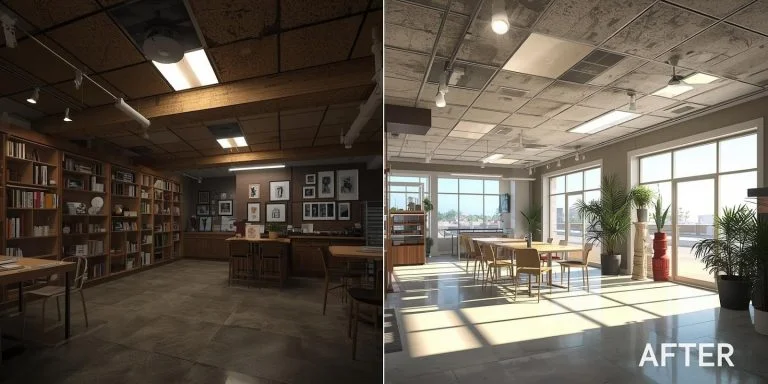
Consider installing a sensor in an area where people forget to turn off the lights, Storage rooms, restrooms, back offices, and break rooms are quite common places. When the lights are automatically turned off by the sensor it stops wasting that you did not see before.
Daylight-responsive lighting is another option to consider. This type of system automatically brightens or dims based on how much natural sunlight is coming into the space. It helps maintain consistent comfort while avoiding unnecessary energy use.
How many of your fixtures still use old lamps or mismatched bulbs? If the number is high, you already know where to start.
Improved energy efficiency HVAC and heat improvements
HVAC systems often run longer than most people realize. When the equipment isn’t properly tuned or updated, it has to work harder than necessary. This leads to excess heat, higher energy use, and added strain on the entire system.
Routine servicing helps, but there are some upgrades that help you go further with your energy efficiency. Good example of this are smart thermostats. They learn occupancy patterns and adjust the heating and cooling automatically. You save energy when the store is closed but you don’t have to check the system everyday.
You also want to look at duct sealing and better airflow. I once monitored a maintenance team who took airflow readings in a retailer building only to discover that half of the conditioned air was leaking to the ceiling space. One simple upgrade cured that problem and slashed their energy use practically overnight.
According to the National Renewable Energy Laboratory, small business owners who upgrade their HVAC systems and improve building energy efficiency often experience lower operating costs and more consistent indoor comfort. Their research shows that even small improvements in heating and cooling can lead to noticeable reductions in energy waste.
When you combine lighting and HVAC improvements, the results are exponential. You feel it in your monthly bills, you feel it in the comfort of your work space.
Improving the power distribution and reliability
As a small business grows, electrical reliability often becomes a bigger concern. Electrical panels become outdated, circuits start to overload, and older wiring can slow daily operations. Machines may flicker, printers might stall, and refrigerators can begin to hum louder than usual—all signs that the electrical system was never upgraded to handle the increased demand.
One little upgrade that is often overlooked is your panel. You get more stable voltage, fewer tripped breakers and safer operation. Combine this with surge guards to shield delicate devices from harm.
As a business adds new equipment, electrical needs can shift quickly. Some machinery runs more efficiently on three-phase power, and in those situations a single phase to 3 phase converter can be a practical solution. It allows businesses to support higher loads without upgrading the entire electrical service, keeping costs and downtime under control.
Professional contractors handle this kind of job most effectively. Many owners ask out service providers, such as FSG electrical construction, during this stage. They guide the process and help you to select the kinds of upgrades that enhance system performance without stretching your budget. It’s a sensible way to maintain order throughout the work.
Smart controls, automation and small upgrades that add up
Some of the upgrades are small, but powerful. A few examples:
- Timers For exterior lighting
- Power strips for offices that are programmable
- Vacancy or occupancy sensors
- Automatic dimming controls
- Easily implemented demand management schedules
One client started by installing sensors, but after noticing a significant drop in energy usage, decided to upgrade the rest of the building as well. Complex automation isn’t always necessary—most of the time, a few simple settings are enough to reduce energy use on a daily basis.
Look around your workplace. Which machines or lights are left on longer than they need to be? That is typically where an upgrade will pay off first.
Safety, Conformance and Sustainability
Electrical upgrades are risk reducing. Old wiring, outdated breakers and aging fixtures are unsafe hazards you won’t be able to see. You do not notice them until something is going wrong. When you refresh panels or increase the lighting quality you increase the safety and comfort to all.
These upgrades also support sustainability goals. Using more energy-efficient options means less energy is needed to achieve the same results. This lowers the building’s environmental impact while helping future-proof the property—an important benefit if customers value sustainability.
Tracking your power savings becomes simpler with updated systems. You can measure improvements directly through in bills, meters, or automated reports and
How to Choose What Upgrades to Focus on
Start with a walkthrough. You don’t require costly equipment for this. Check:
- Burned out or dim lighting
- Loud HVAC units
- Rooms that become too warm or too cold
- Flickering fixtures
- Outlets or panels that appear worn
- Any space where people complain of comfort
Then match these observations with your budget and time line. Upgrades do not have to occur simultaneously. You can do them in phases so that your small business doesn’t miss out on running stress.
If you need help setting priorities, ask your contractor to explain to you what energy savings in each upgrade can be expected. It is easier to choose to if you see real numbers.
The real life impact of upgrades
I used to work in a small production facility and we used a lot of heating in the wee hours of the morning. Their HVAC system was outdated and the lighting was a mixed blend of fluorescent and older bulbs. In this scenario, they began with an easy lighting upgrade and upgraded all the bulbs to LEDs. Then they added sensors to areas where they were often forgotten.
The owner said the energy savings started showing up by the second month. After that, an HVAC tune-up was done along with a few adjustments to the heating and cooling system. Nothing major—just a series of steady improvements. By the end of the year, the business had saved enough on energy costs to invest in another upgrade for the following season.
That’s typically what happens. Each improvement inspires another.
What to Expect after the Upgrades
After completing any upgrades, check your bills. Compare the three months before and after the changes. Also, take into account comfort, lighting brightness, and equipment noise. These improvements might seem small, but they boost productivity and create a better work environment.
You might find fresh possibilities down the road. Changing lighting often results in better layout decisions. Updating an HVAC system opens up room to better filter or better zone. Upgrading panels allows for new equipment.
Upgrades rarely don’t finish with the very first project. They open the path for continuous improvement.
Frequently asked questions
What upgrade can provide the fastest results?
Lighting improvements normally offer direct improvement, especially if you convert from fluorescent to LED.
How frequently should I test my facility?
Annual service works well for most small company settings. More frequent checks facilitate if you work long hours.
Does An HVAC Tune Up Justify Its Cost?
Yes, because heating and cooling are a high percentage of energy use.
Are sensors beneficial in small spaces?
Yes, sensors keep lights from staying on in areas of low traffic,
How long do LED bulbs last?
Many last years depending on run time and quality.
Final thoughts
Upgrading your electrical system can help your small business cut energy costs, improve comfort, and support long-term sustainability. You’ll enjoy brighter, cleaner lighting, more efficient heating, and more consistent energy usage.
Small adjustments can create noticeable power reductions. When you combine upgrades over a period of time, the improvements are additive, and help your building to perform better at all levels.
If you take one step at a time and approach the process, you would see how these upgrades support your operations as well as your goals for the future. Let me know if you would like a shorter version of this article, or a version that is industry specific.
