
Transform Any Room with the Right Wall Art: A Practical Guide
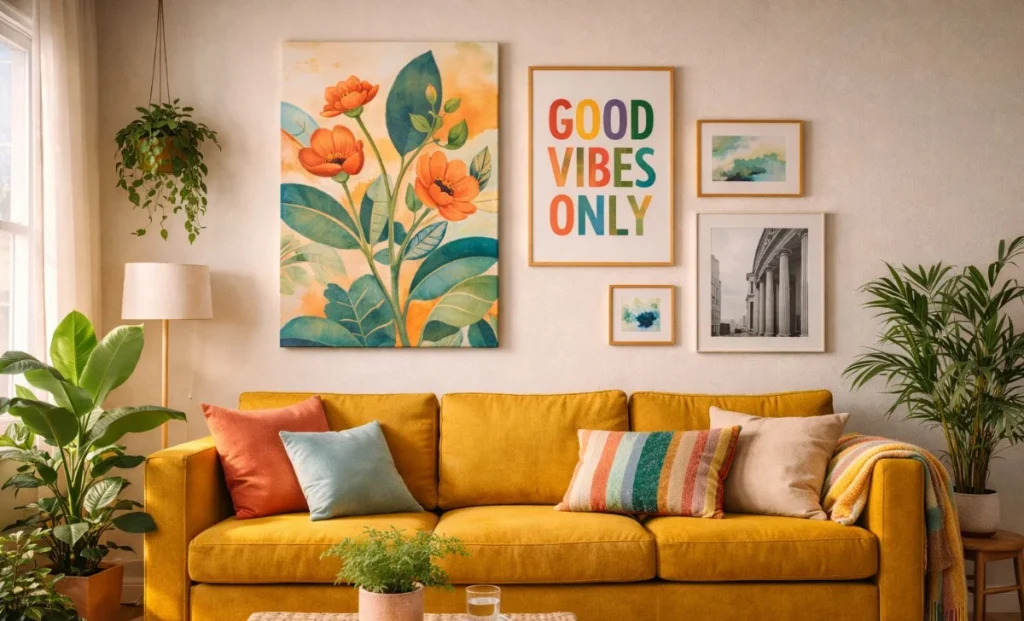
Blank walls are one of the easiest home improvement problems to solve — and yet most people leave them half-solved. They hang something too small for the wall, or put art in the first available spot rather than where it would do the most visual work.
Interior designers consistently identify finishing touches — art, cushions, plants — as the 10% of design work that delivers 50% of the impact. Art is fast, reversible, and relatively affordable compared to repainting or new furniture. This is what separates a space that looks complete from one that seems incomplete.
The Single Rule That Changes Everything: Scale
If there’s one principle that separates good wall art decisions from disappointing ones, it’s this: bigger is almost always better than smaller.
The biggest error people make is putting up artwork that’s too tiny for the space. A small print on a large wall looks like an afterthought — it reads as accidental, even if you can’t quite articulate why.
Professional interior designers use this guide: art above or behind a piece of furniture should span at least 50–70% of that furniture’s width. For a 200cm sofa, the art or arrangement above it should be 100–140cm wide. This sounds large until you see it in person, at which point it simply looks right.
When money is tight, a single big item usually works better than many little ones. Large-format canvas prints from print-on-demand suppliers like Printseekers are more accessible than they used to be — which makes getting scale right increasingly affordable.
Choosing Your Art Style
Minimalist and Scandinavian: Clean lines, neutral palettes, botanical illustrations. Versatile and works in almost any modern interior — but can read as generic if it’s all you have. Mix with something more personal.
Abstract and expressionist: Large-format abstract canvases in fluid colour fields work in almost any colour palette without dictating a specific room theme. Abstract art works best at large scale — small abstract prints often look underpowered.
Botanical and nature prints: Reliable across decades for good reason. Particularly effective in kitchens, bathrooms, and bedrooms. A set of three or four matching botanical prints in similar frames creates a curated gallery-style presentation.
Photography and fine art prints: Black-and-white landscape, architectural, or street photography printed large is one of the most versatile options available. Easy to choose by content — a landscape you love, a city you’ve lived in — which gives the piece personal meaning beyond style.
Custom prints: The fastest-growing category. A personal photograph on canvas, a custom map of a meaningful location, or a personalised illustration — these carry meaning that generic art never can. Printseekers accepts customer-supplied images for production on canvas, metal, or framed prints.
Room by Room
Living room: The wall above or behind the sofa is your biggest visual statement — use your most significant piece or arrangement here. Choose art first, then build accent colours (cushions, throws, objects) around its palette rather than trying to match art to a room that’s already settled.
Bedroom: Calming over stimulating — natural scenes, soft palettes, botanical prints, and flowing abstract work suit the bedroom’s restorative purpose. Art above the bed should be proportioned to the headboard: roughly as wide as the headboard, hung 15–25cm above it.
Kitchen and dining room: Deserves more art than it usually gets. Botanical or food-adjacent subject matter works well; so does deliberately contrasting bold abstract work. Canvas and metal prints are preferable to paper here — less susceptible to humidity and easy to wipe down.
Home office: Two purposes — supporting focus, and looking good behind you on video calls. Architectural photography, bold abstract canvases, and landscape photography all work well. Keep the colour palette composed; very busy backgrounds are distracting on screen.
Bathroom: Treat it as a self-care space. Botanical prints, coastal photography, abstract work in soft greens and blues. Practically: canvas and metal prints handle humidity far better than paper. Avoid wooden frames in high-steam environments.
Children’s rooms: The one context where “more is more” applies. Large illustrated prints, colourful abstract work, personalised name prints. Choose art that can evolve — deeply age-specific themes will be outgrown; abstract colour and illustration style has more longevity.
Making Gallery Walls Work
A gallery wall is one of the most effective approaches to a large wall — and one of the easiest to get wrong. Three things distinguish a gallery wall that looks designed from one that looks random:
A unifying system: consistent frame colour, consistent mat style, a consistent aesthetic theme, or consistent spacing. Without one, the eye has nothing to follow.
An anchor piece: hierarchy matters. One or two clearly dominant pieces give the arrangement structure. Uniformly small, similar-sized pieces feel visually listless.
Layout testing before hanging: arrange everything on the floor, photograph it, then cut paper templates of each frame and blue-tack them to the wall before committing to any holes. Twenty minutes now, no re-patching later.
Formats: Which to Choose and Where
Canvas prints (gallery-wrapped stretched canvas): versatile, no glass required, adds visual texture. The most popular large-scale format, and the right starting point for most rooms.
Metal prints (dye-sublimated aluminium panels): the most vibrant and durable option — completely washable, humidity-proof, and scratch-resistant. Best in contemporary spaces and anywhere moisture is a factor: kitchens, bathrooms, modern offices. Printseekers metal printscome with built-in hangers and a scratch-resistant coating.
Framed prints: the most formal and finished option. The right frame changes the character of the piece significantly — gold float frames suit warmer aesthetics, black metal suits contemporary, natural wood suits organic and botanical content. Paper prints should always be paired with glass for protection.
Custom wallpaper: for homeowners ready to make a commitment — full feature-wall coverage creates presence that no framed piece can match. Peel-and-stick options make this practical even for renters. Printseekers offers custom self-adhesive wallpaper printed to specification.
One care note across all formats: keep canvas and framed prints away from direct prolonged sunlight (UV degrades inks over time); metal prints can be wiped with a damp cloth; canvas with a dry microfibre cloth only.
Start With One Wall
The right plan for decorating your walls is the one you really follow through with. Don’t wait for the perfect room, perfect budget, or perfect vision. Find the wall that feels most incomplete and choose one piece at the right scale.
Good art creates appetite for more good art — and a room with one genuine statement piece usually shows you exactly what else it needs.
