
What to Pack in Your Travel Health Kit Before Any Trip
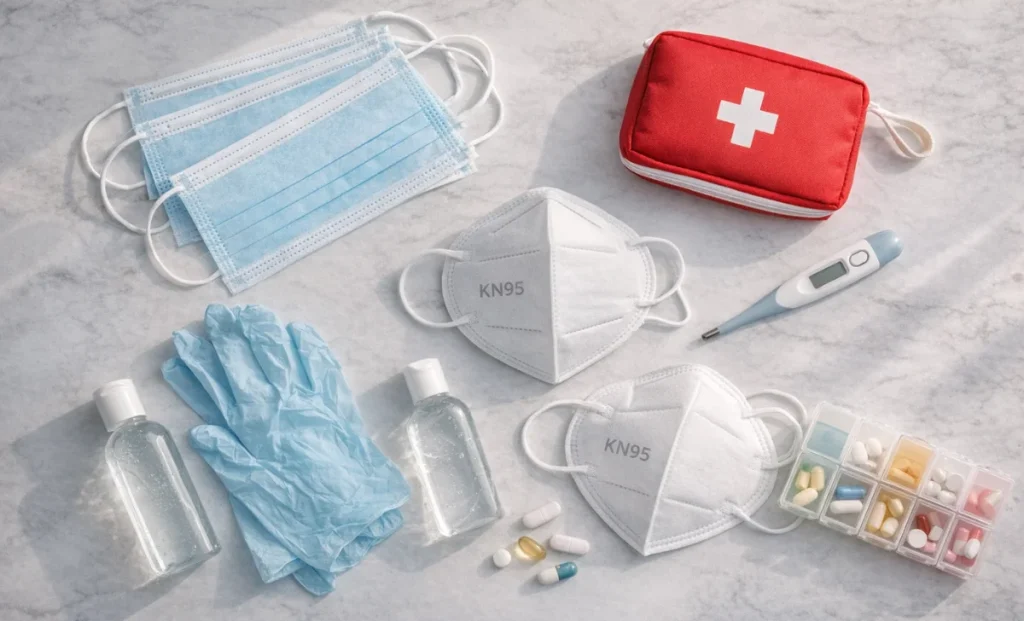
Most people spend hours planning what to wear on a trip. They research restaurants, book excursions, and agonize over luggage weight limits. Then they throw a couple of painkillers into a sandwich bag and call it a health kit.
That works fine until it does not.
Whether you are taking a long-haul international flight, a weekend road trip, or a cruise with three hundred strangers in a floating dining room, your health kit is what stands between you and a miserable trip spent hunting for a pharmacy in a city where you do not speak the language.
Here is what actually belongs in it.
Why Travel Exposes You to More Than You Think
Airports and airplanes are genuinely high-exposure environments. Recirculated cabin air, high-touch surfaces, proximity to hundreds of people from different regions, and the physical stress of travel itself all combine to suppress your immune system at exactly the moment you are most exposed to unfamiliar pathogens.
A 2018 study published in the Proceedings of the National Academy of Sciences found that the risk of catching a respiratory illness on a plane is significantly higher when a passenger with an active infection is seated nearby.
Add international travel into the mix, where you are encountering strains your immune system has less prior exposure to, and the case for preparation becomes straightforward.
This isn’t about worrying too much but about being sensible and prepared.
Respiratory Protection
This is what most people forget to pack but often turns out to be important.
Shahzil Amin, Founder of WellBefore, a home medical supply company that has served over 900,000 US customers, puts it simply:
“Most people only think about masks when something is already going around. The travelers who benefit most from them are the ones who pack them before they need them, not after.”
Standard cloth masks offer limited filtration against the fine particles and airborne pathogens that circulate in enclosed spaces like airplane cabins and airport terminals. A certified KN95 or N95 respirator filters at least 95 percent of airborne particles, which makes a meaningful difference during extended time in poorly ventilated environments.
Not all masks labeled with a filtration percentage have independent testing behind them. Look for products with documented certification details available from the seller.
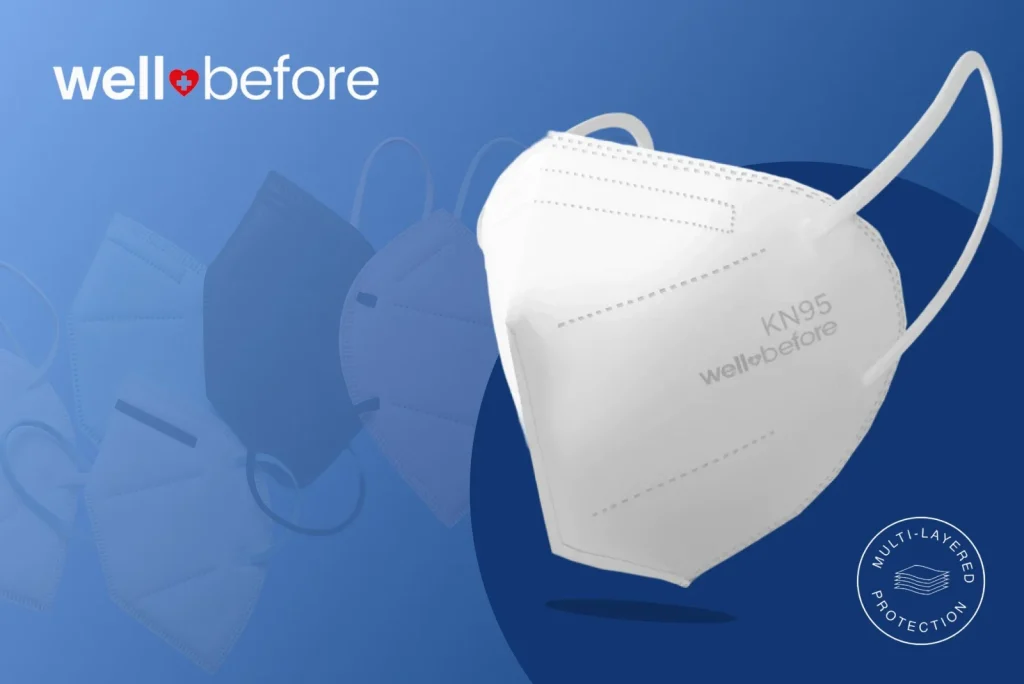
WellBefore carries a range of certified face masks including KN95, N95, surgical, and kids’ options, with filtration ratings and certification information listed on every product page. Stocking up before a trip is significantly easier than trying to find reliable certified options in an unfamiliar airport terminal or a foreign pharmacy.
Bring around four to six face coverings for each traveler on a seven-day journey. They are lightweight, take almost no bag space, and the situations where you will want one tend to arrive without warning.
Gloves
Disposable nitrile gloves are more useful on trips than most travelers expect. Handling luggage that has passed through multiple cargo holds, using shared touchscreens at self-check-in kiosks, and eating on planes where tray tables are notoriously under-cleaned are all situations where a simple disposable barrier makes a difference.
They are not for constant wear. They are for specific high-contact moments where hand washing is not immediately possible.
Pack ten to fifteen pairs in a resealable bag. Nitrile is preferable to latex for general use because latex allergies are common, and nitrile holds up better under friction.
Pain Relief and Fever Management
Pack your preferred fever reducer and pain reliever in the original labeled packaging, particularly for international travel, where customs officials may question unlabeled medications. Acetaminophen and ibuprofen cover fever, headaches, muscle soreness from long travel days, and minor injuries.
Check the legal status of your medications at your destination. Some common US over-the-counter medications are controlled substances in other countries.
Digestive Health
Traveler’s diarrhea affects a significant number of international travelers, particularly those visiting regions with different water treatment standards.
Oral rehydration salts are compact and effective at replacing electrolytes lost during digestive illness. Bismuth subsalicylate tablets help manage symptoms in the short term.
These are not dramatic measures. They are the difference between one uncomfortable day and three days out of commission.
Wound Care Basics
Blisters from walking, minor cuts from unfamiliar terrain, and small injuries from outdoor activities happen on most trips. A compact wound care kit needs adhesive bandages in multiple sizes, antiseptic wipes, medical tape, and a small pair of tweezers. Simple and light.
A Thermometer
A compact digital thermometer gives you objective information when you are trying to decide whether you feel unwell from a long travel day or from an actual developing fever. That distinction matters for deciding whether to push through your itinerary or slow down.
Prescription Medications and Documentation
Carry enough for the full trip plus several extra days in case of delays. Store them in your hand bag, not in your suitcase that goes underneath the plane. Carry a duplicate of your medicine order and a note from your doctor for restricted or needle-based drugs.
How to Pack It
A dedicated travel health pouch keeps everything accessible.
Use a clear resealable bag or a small toiletry pouch. Put it in your hand bag instead of your checked suitcase. Restock after every trip rather than assuming it is still complete from the last one.
WellBefore offers a broad range of home medical supplies, including masks, gloves, and other essentials that translate directly into travel kit staples.
Ordering in one place before a trip is easier than sourcing items across multiple stores at the last minute.
The Bottom Line
A travel medical pack isn’t about getting ready for terrible situations.
It is about handling the ordinary small problems that come up on nearly every trip without those problems eating into the time you planned to spend enjoying yourself.
WellBefore’s approach to home medical supply has always been straightforward: make certified, tested products accessible at honest prices so people have what they need before a situation arises.
That same logic applies to travel preparation. Fifteen minutes of packing before you leave covers most situations most travelers will ever face.
