
Skyscraper Window Cleaners: The Daredevils Who Scale the Glass
The People Who Work Where Birds Fly
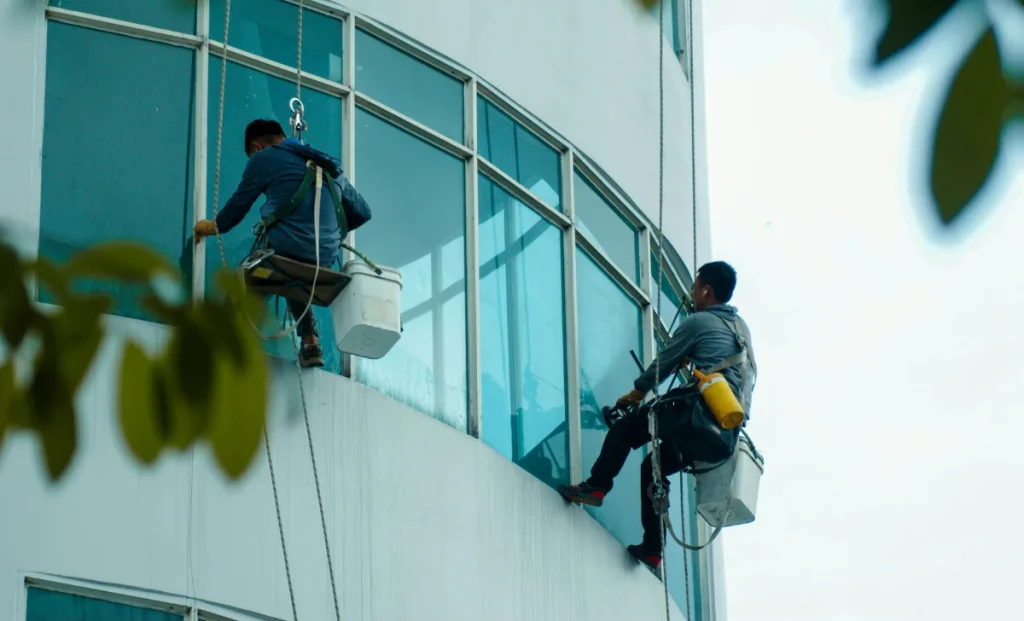
Somewhere right now, above the traffic and the lunch crowds, a person is hanging off the face of a glass tower with nothing but a rope, a harness, and a squeegee between them and a very long story. They wave at office workers through the window. The office workers wave back, slightly horrified, and go back to their spreadsheets.
This is just a regular Tuesday for them.
Steven Wright once joked, “a lot of people are afraid of heights. Not me, I’m afraid of widths.” Funny line. But for the men and women who clean skyscrapers, height stops being a fear and becomes an office. A weird, windy, vertigo-inducing office with the best view in the city.
So who are these people? And how on earth do they do it?
Not Adrenaline Junkies – Professionals
First, let’s kill a myth. These aren’t reckless thrill-seekers chasing a rush.
The reality is almost the opposite. The world of window cleaners skyscrapers depend on is one of the most procedure-obsessed trades out there. Every descent is planned. Every knot is double-checked. Every anchor point gets inspected before a single boot leaves the roof.
Mark Twain understood this way of thinking more than a hundred years back – “being brave means you fight fear and control it, not that you don’t feel it at all.” Someone skilled at working high up feels scared of the height. But they don’t let that fear take over or control what they do. They’ve turned fear into a checklist.
And that checklist is long.
A Day That Starts on the Roof
Before anyone goes over the edge, there’s a whole ritual most people never witness. It looks something like this:
- Weather check. Wind above a certain speed and the whole job is off. No debate. Gusts at altitude are brutal and unpredictable.
- Gear inspection. Ropes, harness, descender, helmet – examined inch by inch. A frayed thread is a dealbreaker.
- Anchor verification. The bolts holding everything are tested against loads many times a person’s weight.
- The buddy system. Nobody goes solo. Someone up top is always watching the lines.
- The slow first drop. That initial lean back over the edge – trusting the rope completely – never quite stops being a moment.
Only then does the actual cleaning begin. Funny, isn’t it? The squeegee is almost an afterthought.
What’s Actually Holding Them Up
Let’s discuss the equipment, as this is where important functions – and being safe – truly exist.
Most high-rise technicians rely on two completely independent rope systems. One to work from, one purely as backup. If the first fails, the second catches. Redundancy isn’t paranoia up there – it’s the entire philosophy.
Here’s the core of what keeps a person aloft and alive:
- A full-body harness, snug and inspected before every drop
- A primary working line plus a separate safety line
- A descender that controls the speed of the slide down
- A backup device that locks onto the rope if things go wrong
- A helmet, because tools and bolts occasionally have other plans
Borrowed almost entirely from mountaineering, this setup turns a sheer glass cliff into something a trained person can navigate with surprising calm.
The Numbers Are Sobering
It’s easy to glamorize the job. The view, the freedom, the bragging rights. But the risk is real, and the people who do it well never forget that.
Reports from the industry show that work on tall buildings causes about one-fourth of all deaths in window cleaning – a surprisingly large number considering how few people actually do this type of work. That’s why insurance for these crews runs so steep, with some figures online citing rates north of $15 for every $100 of payroll.
On the flip side, the trade is getting safer and more professional by the year. A few things driving that shift:
- Stricter regulations and mandatory certifications in most major cities
- A reported jump of more than 20% in demand for properly trained, certified teams
- New tech – from smarter platforms to early robotic cleaners – chipping away at the riskiest tasks
In the internet’s telling, the market for high-rise cleaning systems alone has been climbing fast, roughly tripling across a single decade. Tall buildings keep going up. Somebody has to keep the glass honest.
Why They Keep Going Back Up
Here’s the part that surprises people. Ask a veteran why they do it, and almost nobody says the money.
They talk about the quiet. The strange peace of being suspended above a roaring city that suddenly can’t reach you. The pride of looking up at a flawless tower and thinking – that’s mine, I made that shine. There’s a craftsmanship to it that desk life rarely offers.
A few things they tend to love:
- The view nobody else gets, every single workday
- The focus – up there, your mind has exactly one job
- The visible result, immediate and undeniable
- The camaraderie of a crew that literally holds your life on a rope
Sounds glamorized until the wind picks up. Then it’s all business again.
Look Up Once in a While
Next time you’re walking through a downtown canyon of glass and steel, do something small. Look up.
Odds are, somewhere on those mirrored faces, a tiny figure is sliding down the side of a giant, making it gleam one pane at a time. No applause. No spotlight. Just rope, nerve, and a refusal to let gravity win the day.
They’re not daredevils, not really. They’re craftspeople who happen to work in the sky – mastering the fear, trusting the rope, and turning a terrifying drop into an honest day’s work. The cleanest windows in the city are theirs. And most of us never even notice.
Maybe today, just this once, we should.
