
When Wall-Mounted Lighting Becomes the Only Wall Art You Need
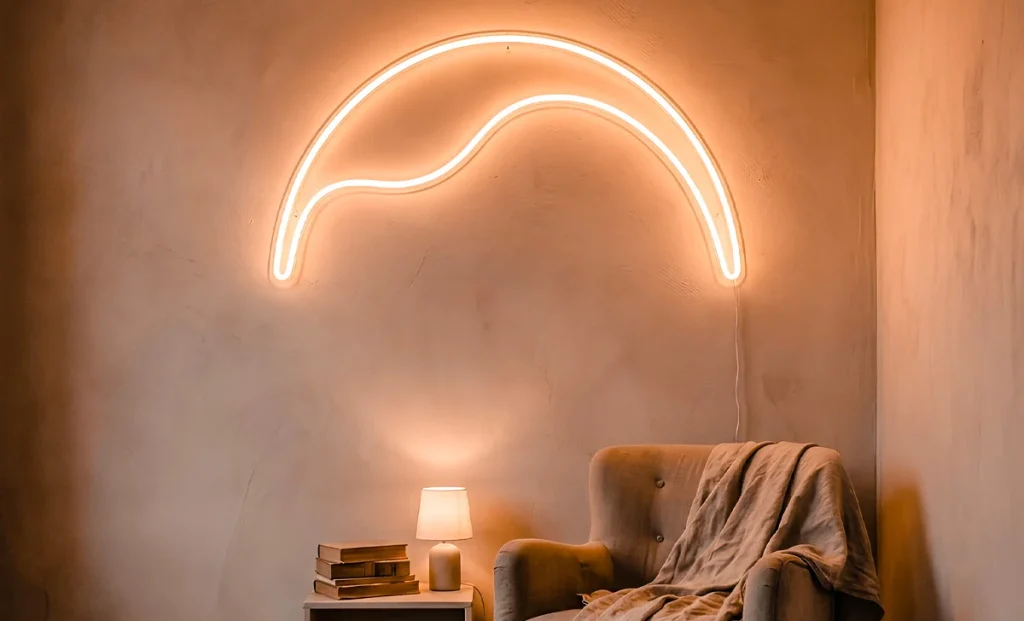
It’s this warm, curved neon piece above my little reading nook. Honestly, it wasn’t even meant to be the main thing in the room. Yet it became the main topic everyone mentions when they visit.
That small change completely shifted how people think about dressing bare walls. They later realised many interior designers had already moved in the same direction, guiding clients toward personalized or custom neon signs as intentional wall art rather than a last-minute add-on.
The thinking is straightforward: why hang something flat and static when you can mount something that lights up, changes the mood, and makes the whole room feel different at night?
This is not a call to cover every surface with loud bar-style signage, unless you genuinely enjoy that look.
It is about understanding why wall-mounted lighting, especially LED neon, has quietly become one of the easiest ways to fill vertical space with character, warmth, and visual weight.
The real questions are who it suits, why it works so well, and what you should consider before you commit to a glowing piece for your wall.
The Problem With Traditional Wall Art Nobody Talks About
Most decor guides skip this, but traditional wall art is trickier to get right than it looks on mood boards. Gallery walls appear effortless on Pinterest, then turn into three weekends of measuring, re-measuring, patching nail holes, and still feeling like the spacing looks slightly wrong from the sofa.
Canvas prints and framed photos absolutely have their place. The issue is that they tend to sit passively while everything else in the room shifts around them, from the way morning light moves to the warm pool of light from an evening table lamp. The art stays flat, so it rarely changes how the wall feels.
Commercial spaces solved this long ago with wall sconces and accent lighting. Hotels, restaurants, and retail stores learned that illuminated walls instantly feel more deliberate and thoughtfully put together.
Homes were slower to catch up, largely because the technology was either expensive or impractical, but LED neon flex changed that by becoming more affordable, dimmable, and energy-efficient, so wall-mounted lighting suddenly made sense for everyday interiors.
Why Lighting Does What a Canvas Can’t
Think about the last space that made you pause as you walked through it. It was the lighting that caught your attention, not a framed print.
Ambient light has a way of setting the emotional tone of a room that flat artwork cannot match. A warm-toned neon sign placed behind a headboard adds depth, throws a soft halo across the wall, and pulls out the texture of plaster or brick that might otherwise go unnoticed. With one piece, you suddenly get color, shadow, and shape working together.
When that light is customised, it stops being generic decor and starts feeling personal. Think of a last name written in flowing script above a fireplace, a short phrase that keeps you focused in a home office, or a playful word in a child’s room.
These pieces do not come straight from a catalogue; they reflect the people who live there, and they keep their color far longer than a poster that fades after a few bright summers, with LED neon flex often rated for roughly 50,000 to 100,000 hours of use.
What really wins people over is that you don’t have to choose between a light fixture and wall art. Instead, a single mounted piece can pull double duty, illuminating the room and serving as the focal point. Many setups feel more cohesive than the typical combination of a separate print and lamp.
Where Wall-Mounted Neon Sign Actually Works Best
You absolutely do not need a neon sign on every wall. Some surfaces genuinely look better left calm or handled with something more subtle. That said, a few spots beg for a lit feature.
Living rooms benefit from treating a neon piece as the anchor for a feature wall. Centre it above a sofa or console, and it naturally pulls the eye, helping the whole seating area feel grounded.
Add a dimmer, which most quality signs now include, and that same piece can shift from relaxed movie-night lighting to low, conversational glow for guests without ever touching a ceiling fixture.
Bedrooms are often the surprise favourite. A soft white or blush-toned sign above the bed can serve as both a decorative headboard accent and traditional wall art with a single decision. Many designers have started to refer to this as a “lit headboard” look, and it is especially helpful in compact apartments where every bit of visual space has to work hard.
Game rooms, and dedicated media spaces seem made for neon, so they feel like the obvious candidates. Entryways, however, are easy to overlook.
A small personalised sign near the front door, whether it is your family name or a clean house number in a simple sans-serif, delivers a first impression that framed art rarely achieves, because it greets guests, lights the area, and almost always triggers a “Where did you find that?” moment.
The Honest Trade-Offs You Should Know
Nothing in design is perfect, and neon is no exception. It solves some problems and introduces a few small ones of its own. Placement matters more than most people expect.
A neon sign needs enough clear wall around it to let the glow drift gently into the surrounding space, which is what creates that polished, intentional effect. If you squeeze it between crowded shelves or competing frames, the light becomes visual noise rather than a calm focal point.
Power cords are the second thing that catches people off guard. Most wall-mounted neon pieces plug into a regular outlet, so unless you think ahead, you will end up with a visible cord running down the wall.
Some homeowners thread the cable behind the wall, which is relatively straightforward with drywall but more effort with brick, while others use paintable cord covers that blend into the wall color. It sounds minor, but if you ignore it, that dangling line will annoy you far more than you expect.
Brightness is the third trade-off. A sign that looks soft and dreamy on a product photo can feel stark in a compact room with pale walls. This is why dimmable controls are worth prioritising, and why it helps to test the light at night before committing to the final mounting height.
Reputable sellers usually include adjustable controllers, which makes finding the right level of glow manageable.
How to Choose the Best Item (Without Making It Too Complicated)
You may feel tempted to make the design too complex, particularly when there are so many choices available. Resist that urge.
The wall-mounted neon pieces that age well share a few simple qualities. They use clean lettering or restrained shapes, a warm or neutral color temperature, and a size that fits the wall rather than overpowering it. As a rough guide, a sign that covers about 40-60% of the horizontal space above a piece of furniture is considered less overwhelming.
Color deserves real thought. Warm white suits living rooms and shared spaces because it mimics candlelight and pairs well with almost any style, from minimalist to more traditional.
Soft pinks and peach tones feel surprisingly calm in bedrooms or reading corners. At the same time, bolder shades like red, blue, and green tend to feel at home or in creative studios where energy matters more than relaxation.
If you are ordering a fully custom piece, most makers now offer digital previews, so you can check the proportions and style before anyone starts production.
The Wall That Does More Than Hold a Nail
Walls make up the largest uninterrupted surfaces in any room, yet most of us fill them with items that quietly fade into the background. Prints look nice, mirrors help you get ready, and clocks are handy, but none of them usually change how the room feels after sunset.
Wall-mounted lighting flips that pattern. It decorates and illuminates the space at the same time, so you can shift the mood of an entire room without swapping furniture or repainting. When the piece is personal, whether it says something meaningful, hints at an inside joke, or glows in a shape that makes you smile, it stops being just another decor item and quickly turns into a conversation starter.
If you have been staring at blank walls or rotating through prints that never quite feel like “you,” it may be worth checking a neon sign company that lets you design your own piece.
Many now offer custom sizes, font choices, and even color matching to work with your existing palette, and the process is usually more straightforward than people expect. Your wall might not need more framed art; it might just need the right light source that finally feels intentional.
