
Height Matters: Choosing the Right Backrest for Your Deep Seat Sofa
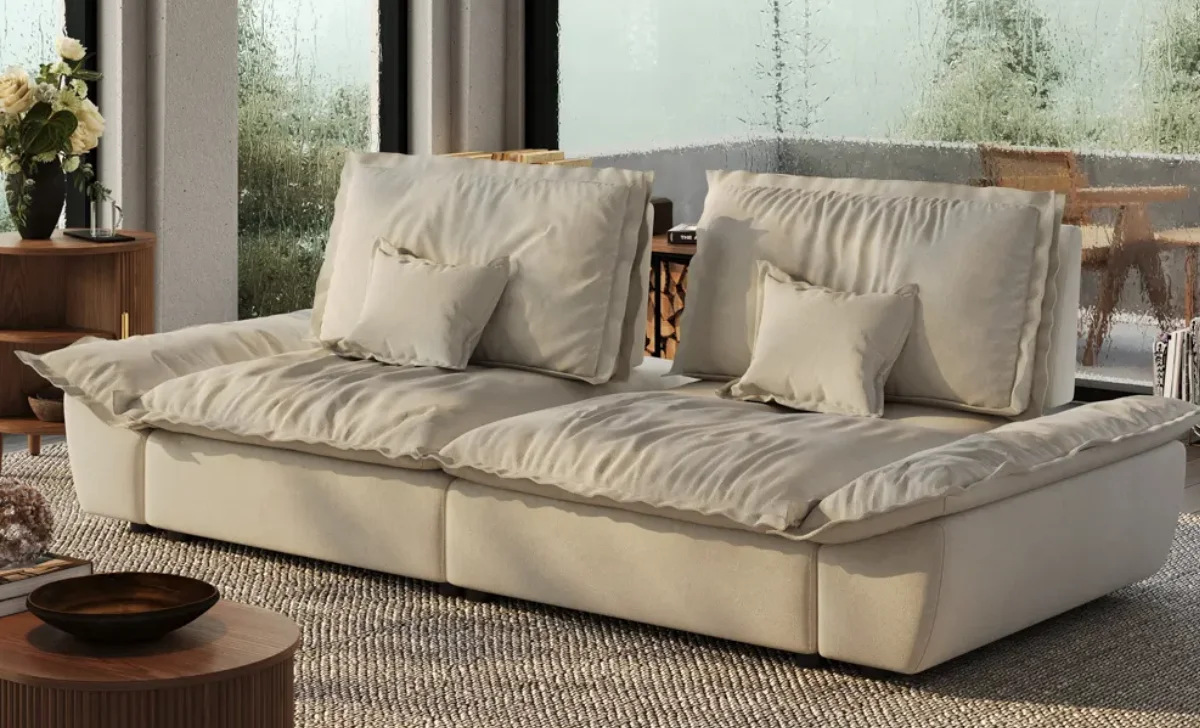
Scroll through any home décor account these days and you will find the same recurring image: an oversized, pillowy sofa dominating a beautifully lit living room, looking like the most inviting place on earth. The appeal of deep-seat furniture is completely understandable. After grinding through a long day, the idea of collapsing into something soft and enveloping sounds like pure bliss.
And yet, a surprising number of people who make this purchase end up disappointed in ways they cannot quite explain.
The sofa looks exactly as it did online. It fits the room. The color is perfect. But after an hour of watching television, something feels off. There is a nagging stiffness creeping up the neck. The shoulders feel tense. A vague discomfort settles into the lower back. What started as a relaxing evening ends with you feeling oddly worse than before you sat down.
The culprit is almost never the sofa’s depth. It is the backrest — the component that most shoppers barely glance at before clicking “add to cart.”
Why the Back of Your Sofa Deserves More Attention
Most people shopping for a deep sofa spend the majority of their time evaluating seat depth, cushion softness, and fabric texture. The backrest gets a quick visual glance at best. This is a costly oversight, because the backrest is essentially the structural spine of your entire lounging experience.
Standard sofas, with their modest 21- to 22-inch seat depths, allow you to sit upright with your feet flat on the floor and your back naturally resting against the cushions. The posture is mostly self-correcting. Deep sofas, however, operate on entirely different terms.
Once a seat depth pushes past 24 inches — and some models stretch well beyond that — the average person simply cannot maintain a conventional seated position. Your legs are not long enough to simultaneously touch the floor and keep your back pressed against the cushions.
So your body adapts. You tuck your legs up, cross them underneath you, or slide your hips forward and recline. That reclined position is exactly where backrest height becomes a make-or-break factor.
Reclining shifts the load. Your head, which weighs somewhere between 10 and 12 pounds, needs structural support the moment you lean back. If the backrest only reaches your shoulder blades, your neck muscles are left doing all the work.
Over the course of an evening, that is an enormous amount of sustained muscular effort — and the result is exactly the tension and soreness that leaves people wondering why their expensive new sofa feels so exhausting.
The Aesthetic Trap That Keeps Selling Uncomfortable Furniture
If a taller backrest solves the problem so neatly, why does so much of the market offer low-profile options?
The honest answer is that low backs photograph beautifully. They keep visual lines horizontal and uninterrupted, making rooms feel more expansive, ceilings feel taller, and open-plan spaces feel more cohesive. Interior design magazines and social media feeds reward this look constantly, which keeps demand for low-back sofas incredibly high.
The problem is that a sofa that exists primarily to look good in photos is not serving the person who actually has to live with it. Real comfort requires acknowledging real anatomy, and this is the gap that separates genuinely thoughtful furniture makers from brands chasing trends.
This is precisely where POVISON Furniture distinguishes itself. Rather than treating ergonomics and aesthetics as competing priorities, their deep-seat designs treat them as inseparable ones. The back frames are constructed to deliver meaningful support at the lumbar and upper back simultaneously, with foam densities calibrated for the specific angles a reclining body actually takes.
The silhouettes remain clean and contemporary without stripping away the structural support that makes extended sitting tolerable. It reflects an understanding that a sofa’s primary job is to be used, not admired from across a room.
Flexible Backrests: The Best of Both Worlds
For those who genuinely love the minimal, architectural look but are unwilling to sacrifice comfort at the end of the day, adjustable headrest mechanisms offer a compelling middle ground.
These systems — now increasingly common in better-made deep sofas — allow the upper section of the backrest to fold flat during the day, preserving a streamlined, low-profile appearance. When it is time to actually settle in for a long evening, the headrest panel lifts and locks into a raised position, providing the neck and upper back support that was absent a moment before.
More advanced versions go further, incorporating motorized controls that let you fine-tune the exact angle of the headrest independently. It is a genuinely clever solution: the sofa presents one visual identity for company and shifts into a completely different ergonomic configuration for personal use.
The Lower Back Problem Nobody Solves With Enough Pillows
Neck support tends to dominate the conversation, but the lumbar region deserves equal attention on a deep sofa.
When your hips drift forward to accommodate the extra seat depth, a significant gap opens between your lower spine and the backrest. Left unsupported, your spine gradually curves into a rounded, compressed shape — the kind that contributes to disc pressure and the dull aching that sets in after an hour or two.
The most common workaround is the decorative pillow stack. People wedge cushions behind their lower backs, build little fortresses of throw pillows, and reconstruct their support system every time they get up for a glass of water. It is functional, but barely.
The more effective solution is a backrest engineered with a deliberate backward tilt — typically in the range of 105 to 110 degrees from the seat — paired with back cushions that are generously filled and contoured to bow slightly forward at the base. This shape actively meets the lumbar curve rather than ignoring it.
POVISON Furniture’s approach to cushion construction reflects exactly this philosophy: premium fill materials that conform to the individual sitter’s shape, creating support that feels personalized rather than generic.
A Simple Measurement That Could Save You a Lot of Regret
Because bodies differ so substantially, there is no universal backrest height that works for every household. The only reliable way to shop smart is to measure before you commit.
Sit down in the chair you use the most and measure two distances starting from the seat cushion: one up to your shoulder height, and another up to the back of your head.
For taller individuals, a backrest height of 18 to 20 inches above the seat cushion typically delivers adequate coverage for both the shoulders and neck. For shorter frames, something closer to 15 or 16 inches may align more naturally with the body’s support points.
A deep couch is a significant purchase—not only for your wallet but also for how well you relax and rest each day. Paying attention to backrest height, recline angle, and lumbar contouring ensures that investment actually delivers what it promises: a place where you can genuinely recover, rather than one that merely looks like you could.
