
Sustainable Living Starts at Home: The Case for Timber Sash Windows Over uPVC
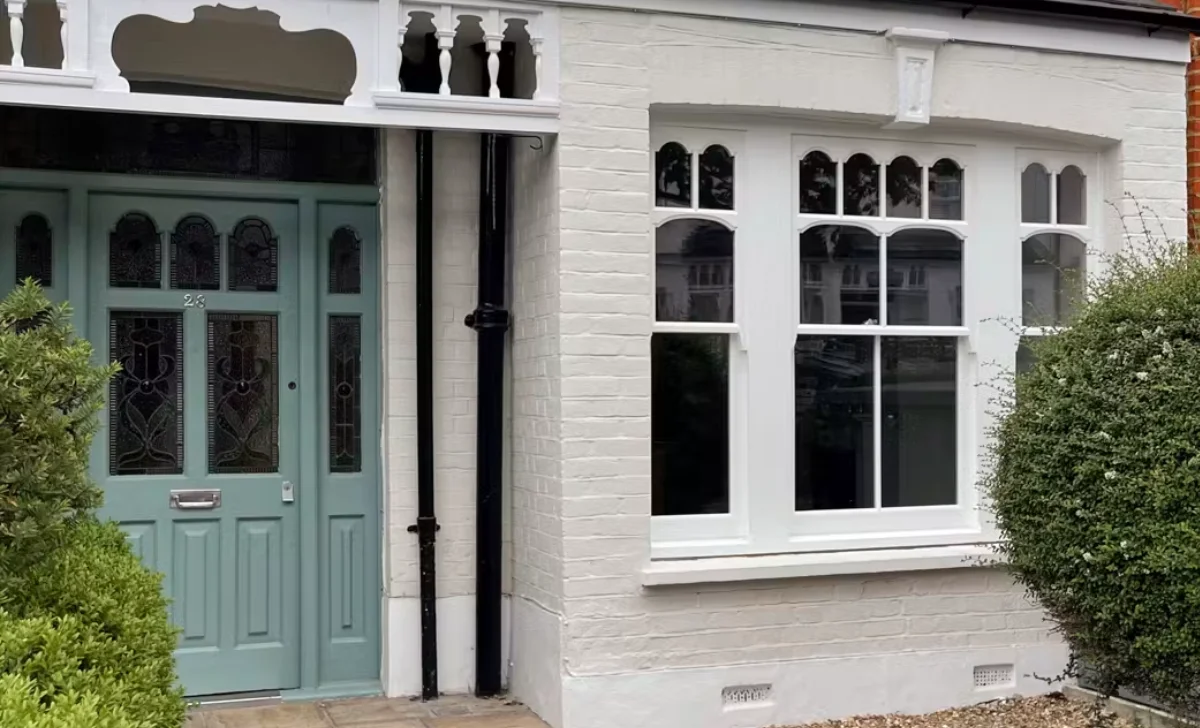
When we think about sustainable living, we tend to think about energy consumption, diet, and transport. Windows rarely feature in the conversation. Yet the windows in your home are one of the most significant material decisions you will make — both in terms of environmental impact and in terms of the energy performance of your home over its lifetime.
For homeowners with period properties — and for anyone who cares about the intersection of environmental responsibility and architectural integrity — the choice between timber and uPVC is not as straightforward as it is often presented.
The Lifecycle Problem With uPVC
uPVC windows are marketed on the basis of low maintenance and competitive price. These claims are not false. But they tell only part of the story.
Production
uPVC comes from polyvinyl chloride, a type of plastic made from oil and chlorine. Its manufacture is energy-intensive and generates chlorinated compounds as byproducts. The production process also involves lead and cadmium stabilisers, though these have been partially phased out in recent years under EU pressure.
Performance Decline
uPVC windows usually last and work well for 20 to 35 years. Over this period, the material yellows, becomes brittle, and the sealed glazing units begin to fail. Unlike timber, uPVC cannot be refinished or restored — when it deteriorates, the entire frame must be replaced.
End of Life
Here is where uPVC’s environmental credentials are most seriously challenged. PVC is difficult to recycle. While recycling programmes exist, only a small proportion of uPVC window frames are actually recycled at end of life. The majority goes to landfill, where the material persists for centuries.
A homeowner who installs uPVC windows may replace them two or three times over the life of their house. Each replacement cycle means more raw material extraction, more energy expenditure, and more plastic waste.
Timber: A Renewable Material With Genuine Longevity
Timber windows have a fundamentally different environmental profile.
Carbon Storage
Trees absorb carbon dioxide as they grow, and that carbon remains stored in the timber for the life of the product. A window frame made of wood actually keeps carbon stored inside it. Responsibly sourced timber from managed forests — carrying FSC or PEFC certification — ensures that the trees felled to make your windows are replaced by new planting.
Longevity
Well-maintained timber sash windows can last well over a hundred years. There are sash windows still in operation in London properties built in the 1780s and 1790s. This is not nostalgia — it is a material fact about the durability of quality timber joinery. A window that lasts 150 years requires only one manufacturing cycle to serve the equivalent of four or five uPVC replacement cycles.
Repairability
When a timber window degrades, it can be repaired at component level. A rotten section of frame can be cut out and replaced with a splice repair. Sash cords can be replaced. Glazing can be renewed without replacing the frame. This repairability dramatically extends the effective lifespan of the product and reduces total material consumption over time.
End of Life
Timber is biodegradable. Unlike uPVC, a timber window at the end of its life can be composted, used as biomass energy, or — if hardwood — repurposed. It does not accumulate in landfill.
The Energy Performance Argument: Setting the Record Straight
One common objection to timber sash windows is their energy performance. The argument usually runs: uPVC frames have better insulation values, so uPVC is better for the environment.
This argument has several weaknesses.
Modern Timber Sash Windows Perform Well
Modern timber sash windows incorporate draught-sealing systems, slimline double glazing, and improved weatherstripping that significantly close the thermal performance gap with uPVC. The difference between a well-specified modern timber sash window and a standard uPVC window is small, and in some cases — particularly with Accoya timber — negligible.
Draught Is More Significant Than Frame Material
The largest source of heat loss in a traditional sash window is air infiltration — draughts around the moving sashes and through the weight pockets. A draught-proofed timber sash window dramatically outperforms a sealed uPVC window that has begun to age and whose seals have degraded. In older properties with solid walls, the sash window is rarely the weakest thermal link in any case.
Embodied Carbon Matters
Environmental assessments that focus only on operational energy performance — heat lost through the window — ignore embodied carbon: the carbon emitted in manufacturing the window. uPVC manufacture is carbon-intensive. Timber manufacture, for responsibly sourced materials, is relatively low-carbon. When whole-life carbon is assessed, timber frequently performs better than uPVC even where its in-use thermal performance is marginally lower.
The Conservation Argument: What We Lose When We Replace
This discussion has more aspects to consider than just the stuff used or power needed.
Period properties were built with sash windows because that was the appropriate window for the architecture. The proportions, the glazing bar profiles, the relationship between solid and void — all of these were designed as an integrated whole. Replacing sash windows with uPVC casements fundamentally alters that relationship.
This matters environmentally, not just aesthetically. A building whose character has been compromised is more likely to be demolished or undergo unsympathetic alteration in the future. A building that lasts longest is one people like enough to look after it for many years. Authentic architecture generates that attachment in a way that compromised architecture does not.
There is also the simple fact that the manufacturing energy that went into the original windows — the felling, sawing, and finishing of timber that may have happened 150 years ago — is already spent. Retaining and restoring original windows preserves that embodied energy investment. Replacing them throws it away.
Practical Steps for Sustainable Sash Window Management
Draught Proofing First
Before considering replacement, invest in a professional draught-proofing service for your existing sash windows. Brush pile seals fitted to the meeting rail, sashes, and frame perimeter can reduce heat loss through air infiltration by 70 to 90 percent. It costs much less than getting new, and it causes almost no harm to nature.
Restore Before You Replace
If frames are damaged, commission a joiner to assess what is repairable. In many cases, significant decay in one or two components does not require full replacement. Splice repairs, new sills, and re-glazing can restore a window to full function at a fraction of the replacement cost and with far lower environmental impact.
Specify Responsibly When Replacement Is Necessary
When a window does need full replacement, specify timber with FSC or PEFC certification. Consider Accoya — an acetylated softwood with a 50-year above-ground guarantee — which offers exceptional longevity and is made from renewable plantation timber.
Secondary Glazing
In protected old buildings where double-paned windows are not allowed, adding an extra pane works very well. Fitted internally, it has no impact on the external appearance of the building and can achieve thermal performance comparable to double glazing while retaining original single-glazed sashes entirely.
Making the Case to Your Household
If you are making the decision alone, the above arguments may be sufficient. But home improvements are often joint decisions, and not everyone approaches them with the same priorities.
The practical case for timber is this: if you intend to stay in your home for more than fifteen years, or if you ever plan to sell it, timber sash windows in good condition add value in a way that uPVC does not. Estate agents in period property markets will tell you that original or sympathetically restored sash windows are a positive in a sale, while uPVC replacements are frequently cited as a negative.
The sustainable choice and the financially rational choice are, in this case, the same choice.
Conclusion
Sustainable living starts with the decisions we make about the buildings we inhabit. Windows are not a marginal issue — they are one of the primary interfaces between our homes and the outside world, and they represent a significant material investment whose consequences extend far beyond the installation date.
The case for timber over uPVC is environmental, architectural, and financial. It rests on a more honest accounting of what materials cost the planet over their full lifetime, not just in the short term. And it recognises that the most sustainable thing we can do with a well-built timber window is to keep it, care for it, and hand it on.
