
The Warning Signs That Your Roof Desperately Needs a Professional Clean
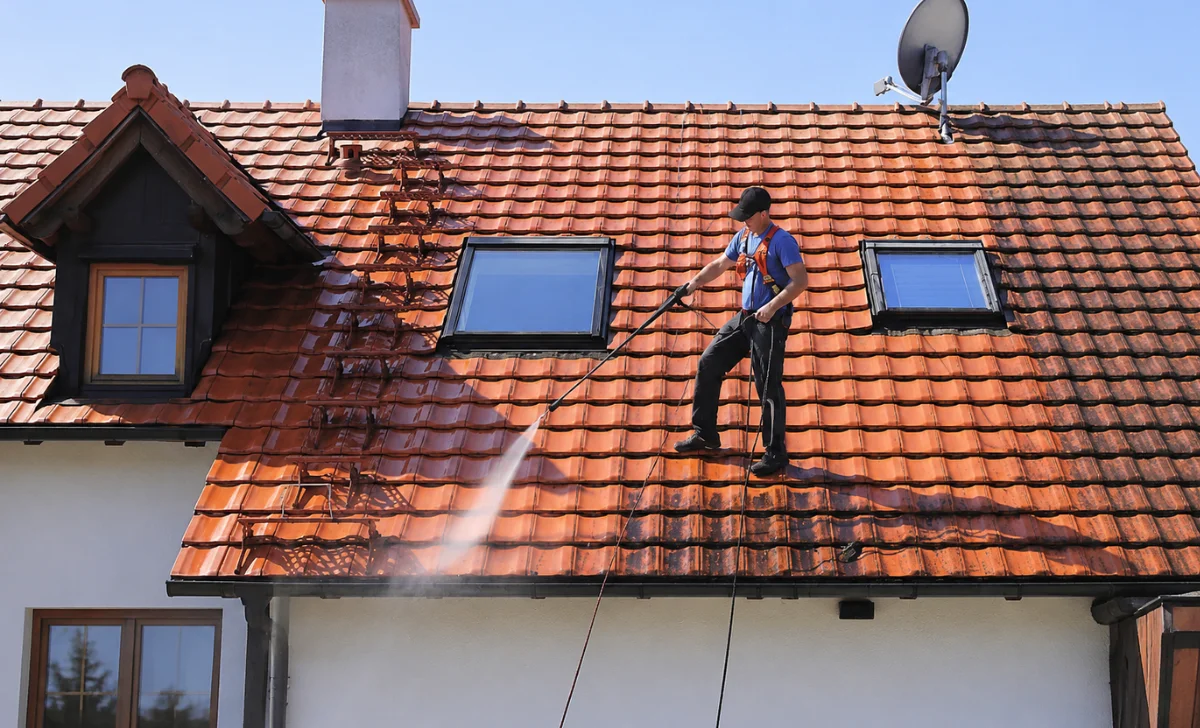
Ireland’s climate is about as hospitable to roof biological growth as any in Europe. The combination of regular rainfall, mild temperatures, and the frequent cloud cover that limits the drying and UV exposure that would otherwise keep moss and algae in check creates conditions where roofs accumulate growth faster than homeowners often expect.
A roof that looked fine two or three years ago can develop significant moss coverage in a wet Irish winter, and the problem is that the warning signs aren’t always obvious from ground level until the growth is well-established.
Knowing what to look for, and knowing when what you’re seeing warrants professional intervention rather than monitoring, is the most useful thing anyone with a roof can understand.
Visible Green Patches on the Roof Surface
This is the most obvious warning sign, but it’s worth being clear about what’s actually happening when you see it. Green patches on roof tiles or slates are almost always moss, and moss is not simply cosmetic. It retains moisture against the roof surface, and that retained moisture is what drives the physical damage.
In Irish conditions specifically, the freeze-thaw cycles that even mild winters produce mean that moisture trapped under or behind moss expands and contracts repeatedly throughout the colder months.
Over time, this works tiles and slates loose, lifts fixings, and progressively compromises the roof structure in ways that don’t show up as a leak until the damage is already significant. A roof with visible green patches is a roof where this process is already underway.
The size and density of the patches matters for urgency. A few isolated patches on a north-facing section of the roof indicate early colonisation that can be addressed without urgency. Widespread coverage, or patches that are visibly raising the edges of tiles or slates, indicates established growth that’s already doing structural work.
Dark Streaking or Discolouration
Dark staining that follows the natural drainage pattern of a roof, appearing as streaks running down the tile face, is typically algae rather than dirt. It’s commonly mistaken for weathering or general grime, which is why it often goes unaddressed for longer than it should.
Algae growth in roof cleaning Ireland terms is particularly relevant because the moisture-heavy climate keeps algae well-hydrated and spreading. Unlike moss, algae doesn’t physically lift tiles, but it creates the surface conditions that moss subsequently colonises.
A roof with significant dark streaking that hasn’t yet developed visible green growth is at a stage where professional treatment can prevent the more damaging moss phase rather than just responding to it.
The colouring can vary. Black or dark grey streaking, particularly on lighter tiles, is a common presentation. On darker tiles it’s easier to miss, which is one of the reasons a ground-level visual inspection can give a false impression of a roof that’s actually in early-stage colonisation.
Moss Visible in Gutters and Downpipes
Gutters accumulating significant quantities of moss fragments and organic debris are a reliable indicator that the roof surface above is shedding material that has become loose or detached from established growth. This is often the warning sign that homeowners notice before they’ve thought to look at the roof surface directly.
Moss in gutters doesn’t just indicate what’s happening above. It creates its own secondary problem by blocking water flow and causing water to back up in ways that can affect fascia boards, soffits, and in bad cases the wall itself behind the gutter.
If the material coming through your gutters is predominantly organic and heavy with moss fragments, the roof is telling you something worth acting on.
Tiles or Slates Sitting Unevenly
This is a more advanced warning sign, and it’s urgent when it appears. Tiles or slates that are visibly raised at the edges, sitting unevenly relative to adjacent pieces, or showing daylight through gaps that weren’t there before, indicate that physical displacement has occurred. Established moss growth is a common cause, particularly when combined with the freeze-thaw damage described above.
A roof in this condition needs professional assessment before cleaning, because the cleaning process itself can dislodge tiles or slates that are already loose, and because the underlying fixing and structure may need attention that goes beyond what a clean alone can address.
Professional roof cleaning Ireland providers who assess before they start, rather than working to a standard process regardless of what they find, are identifying exactly this kind of situation before it becomes more expensive.
Visible Lichen on the Surface
Lichen is the warning sign that gets the least attention because it’s the least dramatic in appearance. It tends to present as flat, grey-green or yellowish growth that blends with the tile colour and is easily overlooked.
The problem is that lichen bonds chemically to the tile or slate surface rather than sitting on top of it, which means it’s the most damaging biological growth in terms of what it does to the surface material itself.
Once lichen is established, removal requires longer chemical dwell times and more careful mechanical work than moss or algae, and there’s always some risk of surface pitting or etching where the lichen has been most active.
An Irish roof that has gone too long without professional cleaning often has lichen as well as moss and algae, and dealing with all three simultaneously is a more involved job than addressing them at earlier stages.
If you can see grey-green or yellowish flat patches that don’t brush off easily, lichen is almost certainly present and professional roof cleaning is overdue.
Why Irish Conditions Make This More Urgent
It’s worth saying directly: roof biological growth in Ireland doesn’t follow the same timeline as in drier or more southerly climates. The weather here keeps surfaces wet for extended periods, limits the UV exposure that naturally inhibits growth, and provides the moderate temperatures that most biological colonisers prefer.
A three-to-four year cleaning cycle that would be adequate in southern England or continental Europe often isn’t adequate in the wetter parts of Ireland.
This makes the warning signs above more likely to appear, and more likely to appear sooner after a previous clean than homeowners expect. The appropriate response isn’t just professional roof cleaning when the signs become obvious. It’s a regular assessment, every two to three years in most Irish conditions, to catch growth before the visible warning signs become urgent ones.
The cost of a professional roof clean is considerably less than the cost of replacing damaged tiles, repairing structural fixing damage, or addressing the water ingress that follows from a roof that’s been left too long. The warning signs exist to give you the window to act before the cheaper option is no longer available.
