
A Founder’s Guide to Sourcing: Securing the Right Overseas Apparel Factory
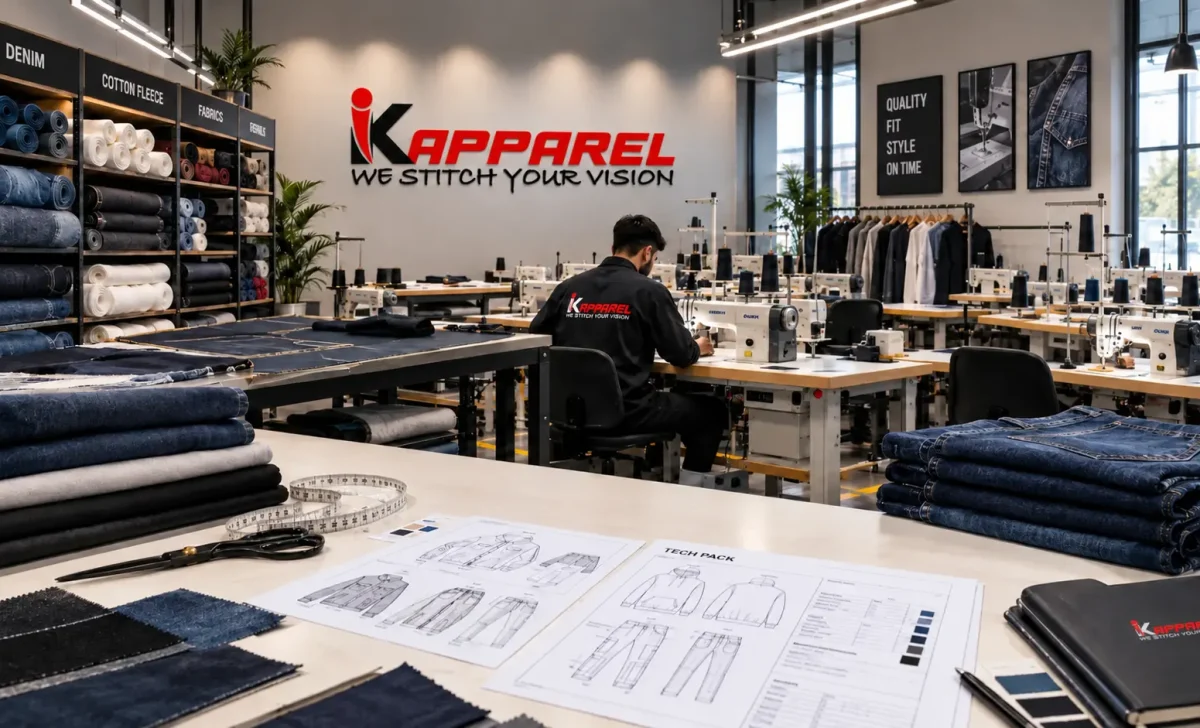
Scaling a clothing brand requires more than just innovative designs; it demands a resilient and highly efficient supply chain. For fashion startups and private labels in the US and Europe, locking in a trustworthy overseas manufacturing partner is the ultimate growth catalyst. A high-tier factory acts as your brand’s engine room, safeguarding your margins and ensuring every drop hits the market on time.
However, navigating international production comes with hurdles like sizing discrepancies and communication gaps. To avoid these pitfalls, identifying reliable clothing manufacturers suppliers is critical. Success depends on a strict vetting process, flawless technical design, and a clear understanding of factory capabilities.
1. Determine Your Production Route: OEM vs. ODM
Before reaching out to a factory, clarify your brand’s core manufacturing needs:
- OEM (Original Equipment Manufacturer): Your factory builds garments from scratch using your exact tech packs, custom size specifications, and selected fabrics. This is non-negotiable for custom streetwear and specialized denim lines.
- ODM (Original Design Manufacturer): The facility provides high-quality blank templates that you personalize with custom neck labels, brand tags, and unique print placements.
Leading global hubs, particularly in Sialkot, Pakistan, specialize in executing flawless OEM/ODM orders, allowing your brand to scale from small capsule collections to massive wholesale runs without losing cut-and-sew quality.
2. Seek Low MOQs with High Scaling Potential
Protecting your cash flow is crucial when launching new collections. Avoid the trap of committing to massive minimum order quantities (MOQs) of 500+ units before you’ve tested the market.
Partner with a facility that offers accessible starting points, such as a low 30-piece MOQ per design. This flexibility allows you to pilot multiple SKUs (like activewear, graphic tees, or hoodies). However, ensure that this same facility possesses the automated machinery and floor space to seamlessly ramp up to thousands of units when your brand goes viral.
3. Emphasize Tech Packs and Precise Pattern Grading
The gap between a good sample and a bad one usually comes down to tech pack comprehension. Your manufacturing partner must exhibit deep expertise in technical apparel design:
- Market-Specific Sizing: US and European fits have distinct rules for chest drape and armhole depth. Ensure your factory strictly adheres to precise measurement charts for your region.
- Pattern Grading: Scaling a medium-sized pattern up to a 3XL requires exact mathematical grading to preserve the garment’s original silhouette.
- Fabric Sourcing: The factory must source your exact specifications, whether that is a 240 GSM heavy cotton for streetwear tees or a 450 GSM French Terry for premium hoodies.
4. Verify Advanced In-House Decoration & Washing
To keep production times low and quality high, your factory should house modern customization equipment under one roof, rather than subcontracting it out:
- Direct-to-Film (DTF) Printing: The industry standard for durable, high-definition graphics that stretch with the fabric and outlast commercial washing.
- Traditional & Specialty Printing: Look for capabilities in Direct-to-Garment (DTG), standard screen printing, and 3D puff printing for bold branding.
- Denim Finishing: If you are producing custom denim jeans, denim skirts, or denim shorts, your partner must have controlled facilities for acid washing, stone washing, enzyme treatments, and whiskering.
- Embroidery: Ensure they use multi-head machines capable of executing complex appliqués and dense 3D embroidery.
5. Master the Prototyping and Sampling Phase
Never bypass the pre-production sample (PPS). This physical prototype is your best tool for evaluating the factory’s attention to detail and communication efficiency.
Analyze your sample ruthlessly: check the stitches per inch (SPI), review the neatness of internal overlock seams, and verify the accuracy of all custom brand labels. A top-tier manufacturer will embrace this feedback, process necessary revisions, and finalize the prototype before bulk cutting begins.
6. Streamline Your Freight with DDP Shipping
Hidden customs fees and delayed freight can destroy your profit margins. When finalizing your manufacturing agreement, always ask for Delivered Duty Paid (DDP) shipping terms.
With DDP, your manufacturing partner handles the entire logistical headache. They manage the air or ocean freight, clear customs, pay the import duties, and arrange final delivery via major couriers (like DHL, UPS, or FedEx) directly to your warehouse. This guarantees a predictable landed cost per garment.
Forging a Winning Manufacturing Partnership
Sourcing overseas is about building a long-term strategic alliance. By partnering with a factory that respects your tech packs, offers a 30-piece development MOQ, executes flawless DTF printing, and manages your DDP logistics, you set a rock-solid foundation for your brand’s global expansion.
