
How Coastal Rain Tests Roof Edges and Gutters
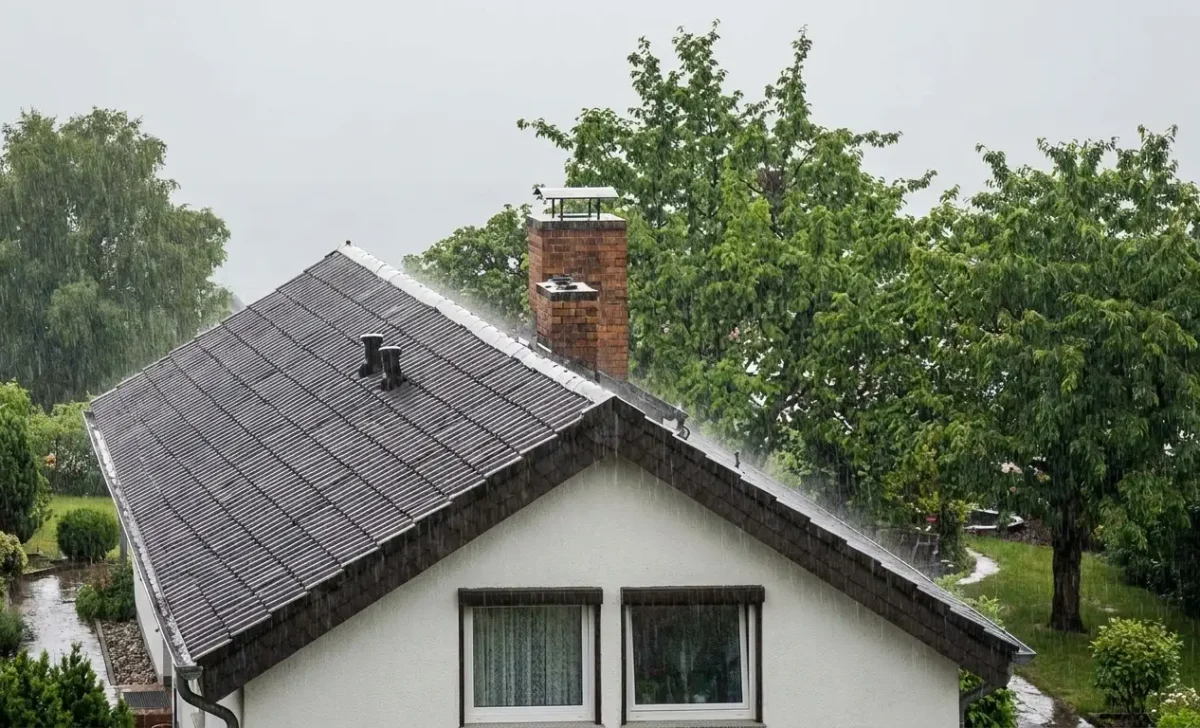
Homes near the coast experience rain that does not always fall straight down. Wind can drive water beneath a loose edge, against a chimney or across a shallow roof junction. A well-maintained roof is designed for exposed weather, but its perimeter and drainage details deserve regular attention.
Edges face extra pressure
Eaves, verges and ridge lines are places where wind can find leverage. From a safe position, look for a tile that no longer follows the surrounding line, loose mortar or a lifted edge. Fascias and soffits can also reveal trouble through peeling finishes or dark staining.
Flashings redirect water
Leadwork around chimneys and wall junctions should form a neat route for rain. A small opening may be difficult to see from below, so indoor clues matter too. Damp around a chimney breast or a mark that appears only during driving rain can justify a focused inspection.
Gutters finish the job
Even a sound roof can be undermined by blocked drainage. Gutters should fall towards outlets and downpipes should discharge without backing up. People comparing guidance on roofing Bognor Regis should ask how roof edges, flashings and rainwater goods work together rather than treating each as a separate job.
Coastal maintenance is not about assuming the worst after every storm. It is about observing the most exposed details and dealing with a clear change before repeated wetting causes wider damage.
Check the inside after prolonged weather
Where loft access is boarded and safe, look for new staining, damp insulation or a musty smell after sustained rain. Use good lighting and never step between joists. A mark that appears only after wind from one direction is useful evidence. Note the timing and location rather than trying to trace the route by disturbing insulation or roof materials.
Check fixings after exposed weather
Coastal wind can test the fixings that hold ridges, verges and individual coverings in place. Homeowners cannot assess every fixing from the ground, but they can look for a new change in line, movement compared with earlier photographs or small fragments below the eaves. One displaced piece may be local, though it can also expose the material beside it to further wind. Recording the location allows a professional to inspect the relevant edge efficiently.
Protect masonry below the roofline
Repeated gutter overflow can affect more than the fascia. Water running down brickwork or render may encourage staining, wash out vulnerable joints or find a route around window heads. The correct response is to restore drainage rather than applying a coating over the wall. During rain, watch where overflow lands and whether the downpipe discharges freely. The evidence may show that a simple blockage, a poor fall or an undersized route needs attention.
Plan work around safe access
Exposed homes may require scaffolding or other suitable equipment even for a relatively small repair. That access is necessary to complete the work safely, rather than an optional addition. Owners should understand which elevations are included, how the building will remain weatherproof and whether gutters or adjacent details can be checked at the same time. Coordinating related work can reduce repeated access costs without expanding the scope unnecessarily.
Verify performance in later rain
The repair is not fully understood until the area has experienced suitable weather. Keep internal photographs and observe the gutter or junction during later rainfall where it is safe to do so. Wet materials may take time to dry, so an old mark should not be judged only by colour. The useful question is whether new moisture appears and whether water now follows the intended route away from the building.
Include sealants and coatings in the review
Coastal exposure can make a quick coating seem attractive, but products need to suit the material beneath them. A surface treatment should not block ventilation, trap moisture or conceal movement around a junction. Sealant applied across a loose detail often cracks because the underlying cause remains.
Ask what preparation is required, how long the product is expected to remain serviceable and whether it can be repaired later. The strongest solution is usually the one that restores the construction detail rather than relying on a broad covering to compensate for it.
Review the property after nearby work
Scaffolding, tree work and external building projects can disturb roof edges or leave debris in gutters. Once the work is complete, check the exposed elevation and observe drainage during the next rain. This is not an accusation that damage occurred. It is a sensible handover step whenever people, tools or materials have been close to weatherproof details.
