
Coloured Gemstone Engagement Rings
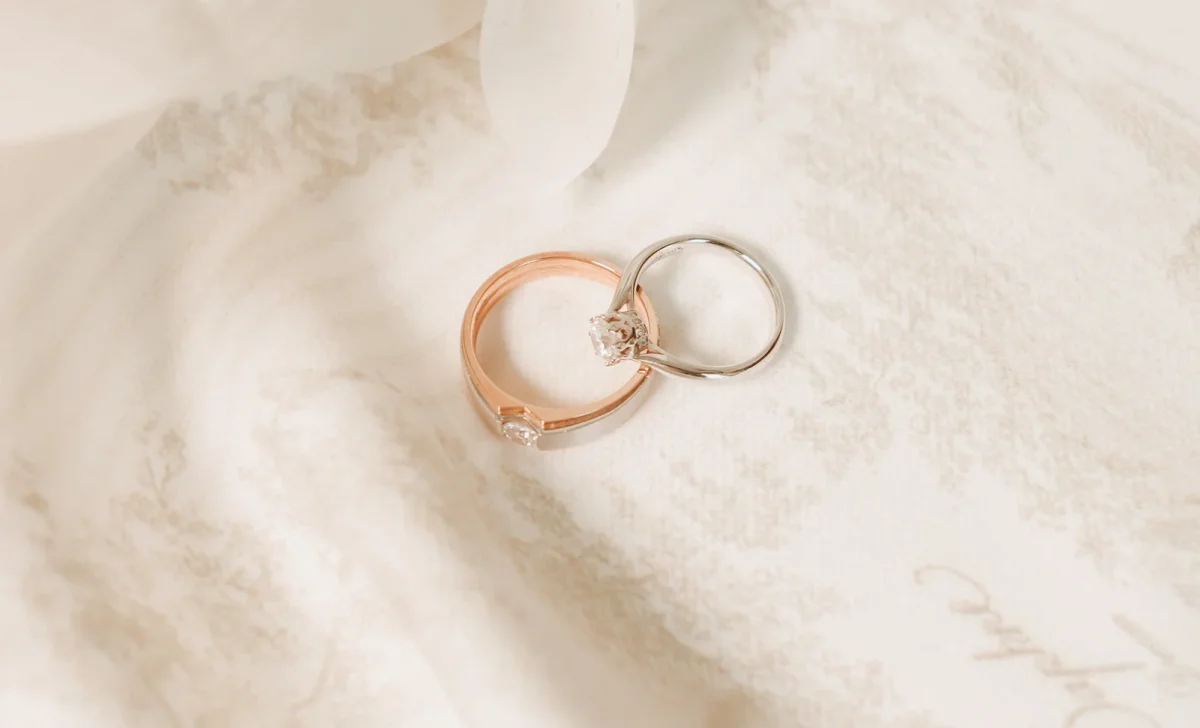
Coloured stones have moved from unusual to mainstream in engagement rings over the last few years, and the advice available has not kept up.
Most of what you will read treats every gemstone as interchangeable, which is how people end up with an opal engagement ring that is chipped within eighteen months, or an emerald whose inclusions become dramatically more visible after a routine cleaning.
The stones vary enormously in durability, in how they are treated before sale, and in how they should be graded. Here is what actually matters when choosing one for a ring worn every day.
Hardness is the first filter
Diamond sits at 10 on the Mohs scale, which measures scratch resistance. Everything else sits below it, and the gap between 9 and 7 is much larger than the numbers suggest, because the scale is not linear.
The practical threshold for a ring worn daily is around 8.
Corundum, which is sapphire and ruby, sits at 9. The same mineral, with the red variety called ruby and every other colour called sapphire. This is the obvious choice for coloured engagement rings and has been for centuries.
Spinel at 8 is hard, tough and historically underrated. Many famous historical rubies turned out to be spinels. It comes in superb reds, pinks, greys and blues.
Topaz at 8 is hard but has perfect cleavage, meaning it splits cleanly along a plane if struck correctly.
Aquamarine and morganite, both beryls, around 7.5 to 8. Reasonable for daily wear with a protective setting.
Emerald, also beryl, nominally 7.5 to 8 and in practice the exception, for reasons below.
Tourmaline around 7 to 7.5, garnet 6.5 to 7.5, tanzanite 6 to 7, moonstone around 6.
Opal at 5.5 to 6.5 and pearl at 2.5 to 4 are not suitable for an engagement ring worn daily, however beautiful they are.
Hardness is not toughness
The distinction that catches people out and is rarely explained.
Hardness is resistance to scratching. Toughness is resistance to chipping and fracturing. They are different properties and a stone can score well on one and badly on the other.
Emerald is the standard example. It rates 7.5 to 8 for hardness, which sounds fine, and it is comparatively brittle because it is typically riddled with internal fractures. Those fractures are so characteristic that the trade calls them the jardin, the garden, and treats them as normal rather than as a defect.
Tanzanite has similar problems, with pronounced cleavage and sensitivity to sudden temperature change.
Opal contains water and can craze and crack if it dries out.
So the question is not only how hard a stone is, but whether it will survive being knocked against a door frame, which is what happens to rings.
Treatments which are nearly universal
Almost all coloured gemstones on the market have been treated in some way. This is normal, accepted and legal, and it must be disclosed. What matters is which treatment, because they differ enormously in stability.
Heat treatment of sapphire and ruby is ubiquitous, permanent and entirely accepted. It improves colour and clarity and it has been done for centuries. An untreated sapphire of good colour carries a significant premium precisely because it is rare, not because heating is a problem.
Beryllium diffusion forces an element into the stone at high temperature to alter colour. It is permanent but it is a much more aggressive intervention and it substantially reduces value. It must be disclosed.
Oiling and resin filling of emerald is close to universal. Oil fills surface-reaching fractures so they are less visible. It is not permanent, it degrades over time, and it is stripped by detergent, heat and ultrasonic cleaning. This is why emeralds should never go in an ultrasonic cleaner and why an emerald can look noticeably worse after an enthusiastic clean.
Lead glass filling of ruby produces stones that look far better than the material justifies and are extremely fragile. These are sold cheaply and should be avoided for a ring. Ask specifically.
Dyeing and impregnation affect porous materials such as turquoise and some jade.
Opal doublets and triplets are thin slices of opal backed and sometimes capped with other material. Legitimate and much cheaper than solid opal, and they cannot get wet at the join.
The rule: ask what treatment the stone has had, and get it in writing. A seller who cannot tell you does not know what they are selling.
Grading coloured stones is not like grading diamonds
An important structural difference.
Diamonds have a universal grading framework. Colour runs D to Z, clarity runs flawless to included, and the scales mean the same thing everywhere.
Coloured stones have nothing equivalent. Colour is described by hue, tone and saturation, and assessment is a trained judgement rather than a measurement against master stones. Different laboratories describe the same stone differently, and terms like royal blue and pigeon blood are trade language rather than defined grades.
What that means practically is that you have to look. With a diamond you can, to a degree, buy on paper. With a coloured stone the paper tells you what it is and how it was treated, and your eyes have to tell you whether it is beautiful.
Two other points.
Clarity expectations differ by species. An eye-clean emerald is exceptionally rare and priced accordingly. An eye-clean sapphire is normal. Judging an emerald by diamond clarity standards makes no sense.
Colour changes under different light. Some sapphires shift noticeably between daylight and incandescent light, and alexandrite does so dramatically by definition. Look at a stone under several light sources before deciding.
What certification should cover
For a coloured stone the report answers different questions than for a diamond.
Species and variety. Confirming it is what it is said to be.
Treatment. The most important line. Heat, diffusion, filling, dyeing, or none detected.
Origin, where relevant. Geographic origin carries substantial premiums for some material. Kashmir, Burmese and Ceylon sapphires command more than equivalent stones from elsewhere. Origin determination is a specialist skill and the laboratories known for it are a short list.
Weight and measurements.
Note that carat weight translates differently across species because densities differ. A one carat sapphire is physically smaller than a one carat diamond, because corundum is denser. When comparing across stones, compare millimetre dimensions rather than carat weight.
Australian stones
Worth knowing, because Australia produces material that is genuinely distinctive and often better value than imported equivalents.
Sapphires from the Central Queensland gemfields around Anakie and Rubyvale, and from the New England region of New South Wales around Inverell and Glen Innes.
Australian sapphires run to deep blues, greens, golds and, most interestingly, parti sapphires, which show two or three distinct colour zones within a single stone. No two are alike, which suits the current appetite for individuality, and they are hard-wearing corundum at 9 on the scale.
Zircon, which is a natural gemstone entirely unrelated to the synthetic cubic zirconia it gets confused with.
Opal, which is Australia’s national gemstone and magnificent, and still not suitable for a ring worn every day.
And Argyle pink diamonds, from the Western Australian mine that produced more than 90 per cent of the world’s pink diamonds before closing permanently in November 2020.
Rio Tinto’s final inventory tender concluded in October 2025, so supply is now fixed, appreciation has run at roughly 8 to 12 per cent a year since closure, and verified Argyle provenance carries a 20 to 50 per cent premium over comparable pinks.
Setting a coloured stone properly
The setting matters more here than with a diamond, because you may be protecting something softer.
Bezel settings surround the stone with a rim of metal. The most protective option and the right answer for anything below about 8 on the hardness scale.
Lower profiles take fewer knocks.
Protected corners. Emerald cuts have their corners cut off precisely because corners chip, and claws should cover them.
Fewer, broader claws rather than many fine ones on a softer stone.
And consider the metal colour against the stone. Yellow gold warms a stone and flatters greens, golds and teals. White metal keeps a blue cool and crisp. This is a real design decision and it is easier to judge with the actual stone in hand.
Light fading and the stones that change
A hazard specific to coloured stones and almost never mentioned at the point of sale.
Some gem materials fade with prolonged light exposure. Kunzite is the classic example and is genuinely unsuitable for a ring worn in daylight. Some amethyst and topaz can lighten over years. Certain treated stones, particularly some irradiated material, are less stable than natural colour.
Corundum, spinel, garnet and beryl are stable. If you are considering anything outside that group, ask specifically whether the colour is light stable, and whether it is natural or the result of irradiation.
There is also the opposite phenomenon, which is a feature rather than a fault. Alexandrite changes colour between daylight and incandescent light, greenish in one and reddish in the other, and colour change sapphires do something similar. It is a genuinely extraordinary effect and the material is scarce and expensive.
Synthetic and simulant coloured stones
The coloured stone equivalent of the laboratory-grown diamond question, and it has existed for far longer.
Synthetic corundum has been produced commercially since the early twentieth century. It is chemically identical to natural sapphire and ruby, it is inexpensive, and it is entirely legitimate provided it is disclosed. A great deal of vintage jewellery contains synthetic stones that were sold honestly at the time.
Synthetic spinel and synthetic emerald are also common.
Simulants are different again: glass, cubic zirconia and other materials coloured to imitate a gem without sharing its composition.
Detection generally requires magnification and sometimes spectroscopy, because synthetic corundum looks like natural corundum and is natural corundum in every chemical respect. Growth features such as curved striae give it away to a gemmologist.
The practical protection is the same as with diamonds: an independent report for anything significant, and a written statement on the invoice of what the stone is.
Choosing one
The practical sequence.
Start with hardness. If it is worn daily, stay at 8 or above unless you are committed to a protective setting and accept the maintenance.
Ask about treatment and get it written on the invoice.
Look at the stone in several lights, including daylight and ordinary indoor light rather than display spotlights.
Compare millimetre dimensions, not carat weight.
Get an independent report for anything significant, covering treatment and, where it affects price, origin.
And have it set by somebody who works with coloured stones regularly, because setting a softer stone is a different job from setting a diamond and requires more care at the bench.
Studios making coloured engagement rings as a routine part of their work, including Australian workshops such as Stelios Jewellers that stock local sapphires alongside diamonds, will generally steer you toward corundum and spinel for daily wear and be honest about what emerald and opal involve.
A jeweller who is happy to set an opal in a solitaire for daily wear without mentioning any of this is not doing you a favour.
Looking after a coloured stone
Care requirements vary more than most people expect, and the wrong routine causes real damage.
Sapphire, ruby and spinel can be cleaned like a diamond. Warm water, a drop of dishwashing liquid and a soft toothbrush, concentrating on the underside where light enters.
Emerald should never see an ultrasonic cleaner, detergent or heat, because all three strip the oil or resin filling its fractures. A barely damp cloth is the right approach, and periodic re-oiling by a jeweller is normal maintenance rather than a repair.
Opal is porous and contains water. Damp cloth only, no soaking, no heat, and avoid storing it anywhere very dry.
Tanzanite dislikes sudden temperature change and ultrasonic vibration.
Anything porous or dyed, including turquoise, is a damp cloth case.
The general rule: unless the stone is corundum, spinel or a diamond, look it up before putting it in anything.
The short version
Sapphire, ruby and spinel for a ring worn every day. Everything else needs a protective setting and realistic expectations.
Treatment disclosure matters more than any grade. Heat on corundum is fine, lead glass filling is not, and emerald oil degrades.
There is no universal colour grading scale, so look at the stone rather than buying on paper.
And Australian parti sapphires are worth seeing, because they are hard-wearing, genuinely individual, and considerably better value than the equivalent imported blue.
This article is general information only. Treatment disclosure and grading practices vary. Confirm species, treatment and certification with your jeweller before purchase.
